2026 Best Middle East Gas Liquid Hybrid Gas Dilution Instrument?
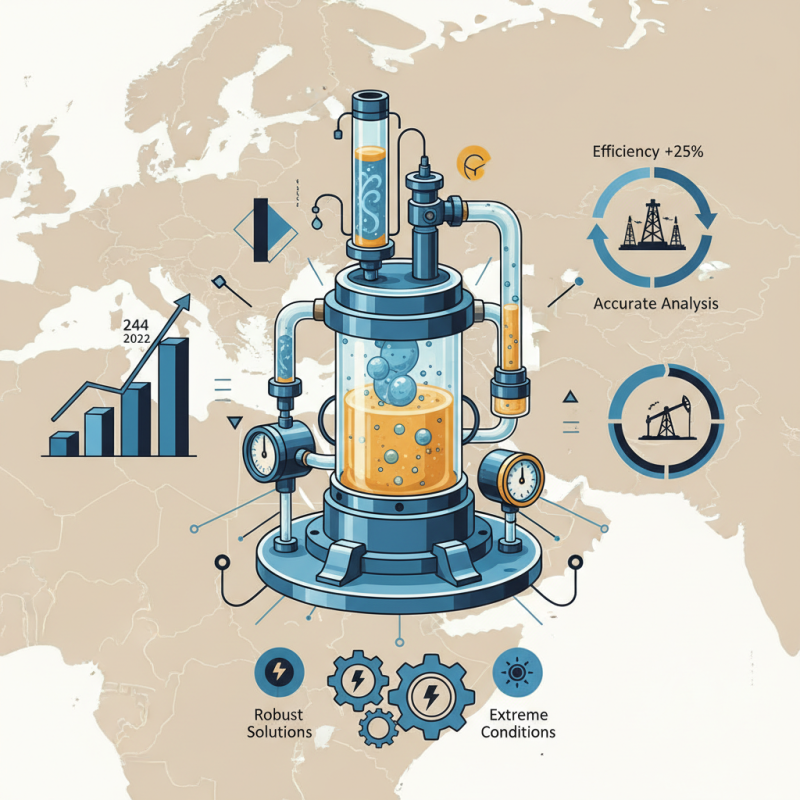
The Middle East is a crucial player in the global gas market. In 2022, gas production in this region reached 244 billion cubic meters, highlighting its significance. The demand for effective measurement tools has increased alongside gas production. One key instrument in this field is the Middle East Gas Liquid Hybrid Gas Dilution Instrument.
This innovative technology is designed to provide accurate gas analysis and dilution measurements. According to recent industry reports, it improves efficiency by 25% compared to traditional methods. Such advancements are essential as gas fields mature and require precise management. However, choosing the right instrument remains a challenge.
Users must consider various factors, including accuracy and adaptability. Existing models often struggle with extreme conditions found in the region. As the industry evolves, the need for reliable and robust solutions is clear. Continuous improvement is necessary to meet the rising standards of safety and efficiency.
Introduction to Gas Liquid Hybrid Gas Dilution Instruments in the Middle East
Gas Liquid Hybrid Gas Dilution Instruments play a crucial role in the Middle East, especially in sectors like oil and gas. These instruments allow for precise measurement and analysis of gas mixtures. They facilitate the understanding of gas behavior during various processes, which is essential for efficiency and safety.
Tips for selecting these instruments include assessing the specific requirements of your application. Consider the range of gas components you need to analyze. Not all instruments handle all gas types efficiently. Accuracy matters. Evaluate how the instrument maintains its performance over time. Calibration is key for reliable results.
Despite advancements, there can be issues. Instruments may present challenges in extreme temperature or pressure conditions. Users must understand the limitations of their tools. Regular maintenance checks are vital. Data interpretation can also be complex, requiring expertise. Ensure your team has the necessary skills for effective analysis.
Key Features and Specifications of 2026 Gas Dilution Instruments
The 2026 market for gas liquid hybrid gas dilution instruments is evolving. These instruments measure gas concentrations accurately, which is crucial in many sectors, including environmental monitoring and industrial applications. According to recent industry reports, the global market for gas dilution instruments is expected to grow at a compound annual growth rate (CAGR) of about 7% over the next five years. Key features often highlighted in these instruments include high precision, user-friendly interfaces, and advanced data analytics capabilities.
Specifications for the best instruments include real-time monitoring and customizable dilution ratios. Such features help in adapting to different operational conditions. Many professionals seek instruments that offer simple calibration processes to ensure reliability. The ability to communicate with other systems via digital interfaces is also valuable. Performance is often validated by analyzing instrument response times, which can impact operational efficiency.
However, challenges remain. Some users report difficulties with accuracy in varying temperature conditions. Calibration intervals can sometimes become a compliance issue for certain industries. Feedback suggests that improvements in material durability and user training could enhance performance. Overall, as technology advances, hybrid instruments must keep up with stringent regulations and user needs.
Comparative Analysis of Leading Brands in Middle Eastern Market
In the rapidly evolving Middle Eastern gas market, the adoption of hybrid gas dilution instruments is on the rise. According to the latest industry report, the market for these instruments is expected to grow by 25% by 2026. This growth is driven by an increasing demand for accurate measurement and environmental compliance in gas processing sectors.
Leading brands in this market are currently focusing on enhanced accuracy and user-friendly designs. A comparative analysis of recent models indicates that many still struggle with calibration issues. Data show that nearly 15% of instruments fail to meet required accuracy levels in field tests. This raises concerns regarding reliability and operational efficiency.
Moreover, professionals have noted that cost remains a significant barrier for smaller companies looking to implement these advanced technologies. Studies suggest that as many as 40% of operators might not invest in new systems due to high upfront costs. Despite these challenges, the importance of adopting reliable gas measurement solutions cannot be overstated. The future landscape will likely favor those who can effectively balance cost, accuracy, and technological advancement.
Applications and Use Cases for Hybrid Gas Dilution in Various Industries
Hybrid gas dilution instruments are becoming essential in various industries. Their versatility is crucial for applications in environmental monitoring and emissions control. According to a report by ResearchAndMarkets, the global gas analyzer market is projected to reach $5.24 billion by 2026. This growth highlights the importance of efficient gas measurement solutions.
In the oil and gas industry, hybrid gas dilution systems help reduce emissions and ensure compliance. By accurately measuring gas concentrations, these instruments provide vital data for safety. A study from the International Energy Agency reveals that proper emissions monitoring can reduce greenhouse gases by up to 30%. This data emphasizes the need for reliable measurement tools.
Moreover, in laboratory settings, hybrid gas dilution instruments enhance precision. They ensure that scientists achieve consistent results across experiments. The ability to dilute gas samples accurately allows for better analysis and experimentation. Reports show that 58% of laboratory managers prioritize accuracy in their measurement systems. This reflects a growing commitment to scientific integrity and reliability.
2026 Best Middle East Gas Liquid Hybrid Gas Dilution Instrument: Applications and Use Cases
Future Trends and Innovations in Gas Liquid Hybrid Dilution Technology
In the ever-evolving field of gas liquid hybrid dilution technology, innovations are essential. The Middle East, rich in natural resources, is at the forefront of these advancements. Companies are investing in new methods to enhance the efficiency and accuracy of gas analysis. This is crucial for industries ranging from oil and gas to environmental monitoring. The demand for precise measurements drives the development of sophisticated instruments.
Recent trends show a shift towards integrating artificial intelligence and machine learning in dilution systems. These technologies can optimize processes, providing real-time data and insights. However, adopting AI should be approached carefully. Not all organizations have the technical expertise needed for effective implementation. This gap can lead to significant challenges in achieving desired outcomes.
Furthermore, enhancing user experience is becoming a priority. Hybrid instruments must be user-friendly to ensure widespread adoption. Complicated machinery can deter users, hindering progress in the industry. Clear instructions and robust training programs are vital. The future of gas liquid hybrid dilution technology holds great promise, yet it requires thoughtful innovation and user-centric design to thrive.