Why Is Additive Technology Essential for Global Sourcing Success?
In today’s competitive global market, additive technology plays a crucial role in sourcing success. Experts agree on its transformative impact. Dr. Emily Chen, a leader in additive manufacturing, emphasizes, "Additive technology reshapes how we think about production and supply chains." Her insight highlights the importance of this technology.
Additive technology enables businesses to produce customized products quickly. This flexibility helps companies respond to market changes efficiently. With the rise of globalization, the ability to adapt is vital. Traditional manufacturing methods often struggle to meet these demands. Companies risk falling behind without integrating additive technology into their strategies.
However, many organizations face challenges in adoption. Skills gaps and resistance to change are common hurdles. Leaders must reflect on their readiness to embrace these innovations. The benefits are significant, yet the journey requires careful consideration and planning. Balancing innovation with existing processes can be difficult, but the potential rewards are worth the effort.

The Role of Additive Technology in Modern Manufacturing Processes
Additive technology, particularly 3D printing, is revolutionizing modern manufacturing processes. According to a report by Gartner, by 2025, 30% of all manufacturing companies are expected to adopt some form of additive technology. This transition can lead to significant cost reductions and faster prototyping. Traditional manufacturing often involves high overhead costs and extended lead times. In contrast, additive manufacturing allows for on-demand production, which streamlines supply chains and promotes sustainability.
However, the adoption of additive technology is not without its challenges. While it can produce complex designs, the strength and quality of 3D printed materials may not always match those made through traditional methods. A 2022 study by Deloitte revealed that many companies are still hesitant due to concerns about part performance and regulatory compliance. Additionally, integrating new technologies requires skilled personnel, which can be a barrier for many organizations. These factors highlight the critical need for careful planning and quality assurance in the implementation of additive technology.
Despite these hurdles, the industry is moving forward. The global additive manufacturing market is projected to grow from $12 billion in 2022 to over $60 billion by 2028. This rapid expansion underscores the technology's vital role in reshaping traditional manufacturing landscapes, promoting efficiency, and enabling innovations that were previously unimaginable. The journey is complex, but the potential rewards encourage continuous exploration and adaptation.
Enhancing Supply Chain Efficiency with Additive Manufacturing
Additive manufacturing revolutionizes supply chain efficiency. This technology allows for rapid prototyping and customization. Businesses can produce parts on-demand, reducing waste and inventory costs. Traditional methods often involve long production times and high minimum order quantities. In contrast, additive technology enables faster turnaround and flexibility.
Consider a scenario where a manufacturer faces unexpected demand changes. With additive technology, they can easily adjust production while minimizing delays. This capability not only enhances responsiveness but also strengthens relationships with clients. However, integrating this technology isn't without challenges. It requires investment in new skills and equipment. Companies may struggle with these initial costs and learning curves.
Moreover, the quality of 3D-printed parts can sometimes be inconsistent. There may be variations due to material properties or printer settings. Businesses need robust quality control measures to address these issues. Being aware of potential pitfalls is key to successful implementation. Despite the challenges, the benefits of additive manufacturing in enhancing supply chain efficiency are significant and deserve attention.
Impact of Additive Manufacturing on Supply Chain Efficiency
Cost Reduction and Resource Management through Additive Techniques
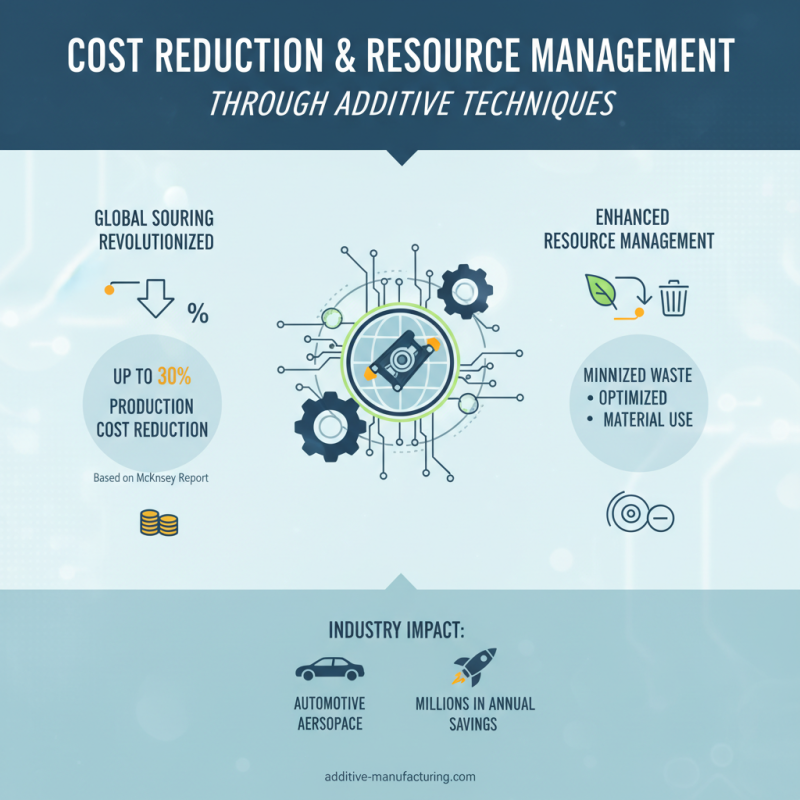
Additive technology is revolutionizing global sourcing by enabling significant cost reductions and enhancing resource management. According to a McKinsey report, companies that adopt additive manufacturing can reduce production costs by up to 30%. This technology minimizes waste by using only the necessary materials, thus optimizing the production process. For many industries, such as automotive and aerospace, even a small reduction in costs can lead to millions in savings annually.
Moreover, additive manufacturing allows for localized production. This reduces transportation costs and lead times. A Deloitte study found that 50% of manufacturers plan to advance their adoption of these techniques. However, transitioning to additive technology is not without challenges. Many companies face skills gaps in their workforce and an initial investment barrier. They often need to rethink supply chains and integrate new materials, which can be daunting.
Implementing these techniques can enhance inventory management. Real-time data can streamline replenishment processes. A report from Gartner noted that businesses utilizing additive technology can achieve 25% faster inventory turnover. Yet, companies must remain vigilant. The landscape is evolving, and failure to adapt can result in lost opportunities. Balancing innovation with practical applications remains a critical task for leaders in this space.
Global Collaboration Opportunities Enabled by Additive Technology
Additive technology is reshaping global sourcing by enabling more flexible collaborations. This technology allows companies to produce complex parts quickly and efficiently. According to a report by Wohlers Associates, the additive manufacturing market is projected to reach $100 billion by 2025. This growth reflects its potential to disrupt traditional supply chains.
With additive technology, organizations can collaborate across borders. Prototyping becomes faster, and adjustments can happen in real time. Data from the International Data Corporation states that 30% of companies using additive manufacturing have seen a reduction in time to market. This not only accelerates product development but also opens new opportunities for innovation. However, challenges remain. Companies must address material limitations and quality control.
Additive manufacturing also encourages shared design processes. It makes co-creation possible, but not without difficulties. Collaborative projects can lead to miscommunication. This can result in delays and increased costs. As companies navigate these challenges, the right balance between collaboration and control is essential for achieving success.
Future Trends in Global Sourcing with Additive Manufacturing Innovations
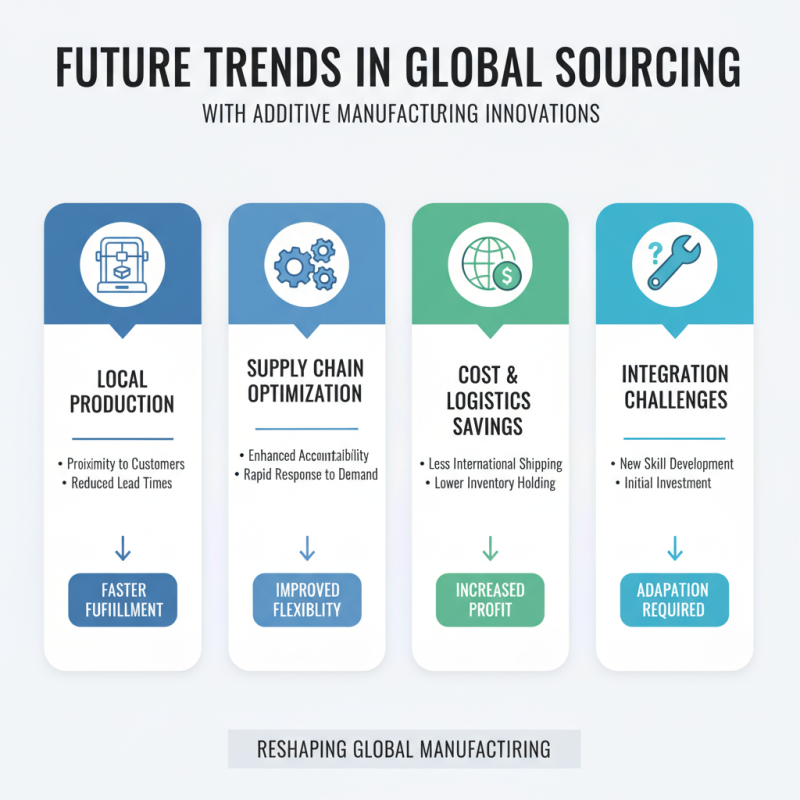
Additive manufacturing, often referred to as 3D printing, is reshaping global sourcing landscapes. This technology allows companies to produce complex parts closer to their customer base. Accountability in supply chain management improves as firms can respond to demands rapidly. Local production reduces lead times and costs associated with international logistics. However, the integration of these advancements is not without challenges.
Organizations must navigate the nuances of adopting additive techniques. Training employees in new technologies takes time and resources. There may also be resistance to change within established manufacturing processes. Quality control is another area that requires attention, as the technology evolves. Furthermore, as additive manufacturing becomes more prevalent, sourcing strategies will need continuous updates. Companies should remain agile to leverage innovations effectively. Balancing traditional methods with these emerging trends is crucial for growth.