





Choosing the best injection mold inserts in 2026 starts with the part, not a catalog. A thin rib, abrasive resin, or sharp internal corner can change the right choice. So can production volume. Hardened tool steel may suit demanding runs, while copper alloys can help move heat from stubborn hot spots. Replaceable inserts can simplify repairs. But they still need sound fit, support, and cooling design.
John Bozzelli, a respected scientific-molding educator, advocates measuring process behavior rather than relying on guesswork. A practical paraphrase of that principle applies here: “Measure the process before changing the tool.” That is not a verified verbatim quotation. It is a useful reminder to check cycle data, part quality, and temperature patterns before selecting an insert material or geometry.
This guide compares injection mold inserts by wear resistance, heat transfer, machinability, maintenance, and cost. It also considers real shop-floor details: a polished cavity face, a cooling channel near a hot core, or a replacement insert that must return to the same position. Small differences matter. A cheaper insert can become expensive if it drives frequent downtime. And even a premium material cannot fix poor venting or an unstable molding process. There are trade-offs; no single insert is best for every mold. Each recommendation should be checked against resin, tooling conditions, and production goals.
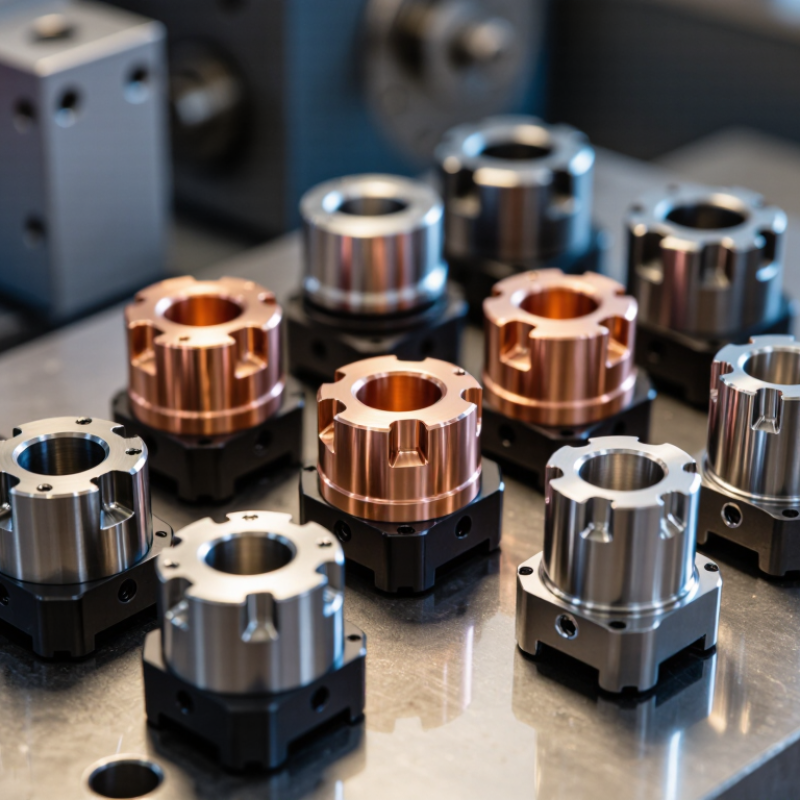
Injection mold inserts are removable components fitted inside a mold to form specific features in a plastic part. They may create a threaded hole, a narrow rib, a textured patch, or a cavity that would be difficult to machine into the main mold. Common materials include hardened tool steel and copper alloys, selected according to wear, heat transfer, and production volume.
Small parts, big influence.
During molding, molten plastic flows around the insert’s shaped surfaces and cools into the intended geometry. The insert must sit securely in its pocket, with close-fitting interfaces that limit flash and prevent movement under pressure. It also needs a clear path for heat to escape.
A poorly cooled insert can leave a glossy patch beside a dull one, or cause uneven shrinkage. That is easy to miss in a drawing.
In practice, designers use inserts to simplify mold repairs and make localized changes without replacing an entire mold section. A worn edge, for example, may be corrected by changing one insert. Selection still requires trade-offs: harder steel can resist wear, while a more conductive alloy may shorten cooling time but need added protection. There is no universally best insert. Material, fit, cooling, and maintenance all matter, and real production results should be checked against the part’s tolerances. A neat theory can still meet a stubborn mold.
Injection mold insert performance in 2026 depends on more than material hardness. The right choice starts with the resin, expected shot volume, and part geometry. Abrasive or glass-filled resins can wear steel quickly, while corrosive materials may call for better corrosion resistance. A polished cavity can improve surface finish, but polishing alone will not fix poor venting or an unstable process.
Heat transfer matters. An insert with suitable thermal conductivity can help manage cycle time and reduce uneven cooling, especially around thick ribs or tight cores. Yet faster heat removal is not always better: temperature differences across the mold can cause warpage or inconsistent dimensions. Measure actual cavity temperatures where possible. A few degrees can matter.
Fit and serviceability deserve equal attention. Inserts need secure seating and enough support to resist injection pressure without shifting. Clear access for removal can reduce downtime when a worn detail needs replacement. Small details matter. In practice, the “best” insert may be the one that lasts slightly less time but can be changed quickly and inspected reliably. That trade-off is easy to underestimate. Track wear, flash, and dimensional drift across production runs; operator observations are useful, but records make comparisons more dependable.
There is no single best insert material for every mold. The right choice depends on the resin, production volume, cooling needs, corrosion exposure, geometry, and maintenance plan. The comparisons below are qualitative; actual properties vary by grade, heat treatment, and supplier specification.
| Insert material | Relative thermal conductivity | Wear and strength characteristics | Corrosion resistance | Common applications | Main trade-off |
|---|---|---|---|---|---|
| H13 hot-work tool steel | Moderate | Good toughness and resistance to thermal fatigue; can be heat-treated for demanding service. | Limited; generally needs protection where corrosive conditions are present. | General-purpose cavities and cores, especially where heat checking or repeated thermal cycling is a concern. | Does not remove heat as quickly as copper alloys; final performance depends on heat treatment and surface condition. |
| P20 pre-hardened mold steel | Moderate | Good machinability and balanced strength in its supplied pre-hardened condition. | Limited to moderate, depending on grade and environment. | General-purpose molds and replaceable inserts for moderate production requirements. | May not suit highly abrasive, highly corrosive, or severe thermal-cycling applications without a more specialized grade. |
| 420 stainless mold steel | Low to moderate | Can achieve useful hardness and wear resistance after heat treatment. | Good relative to standard mold steels when properly heat-treated and maintained. | Processing moisture-sensitive or corrosive resins, and applications where rust resistance is important. | Heat treatment and polishing requirements affect results; it conducts heat less effectively than copper alloys. |
| S7 shock-resisting tool steel | Low to moderate | Designed for high impact resistance and toughness; wear performance depends on hardness and operating conditions. | Limited. | Inserts exposed to impact, sudden loading, or handling-related damage. | Not typically selected primarily for corrosion resistance or rapid heat removal. |
| Copper alloy, including beryllium-free grades | High relative to tool steels; exact conductivity varies substantially by alloy. | Usually softer than hardened tool steel, though alloy choice can improve strength. | Varies by alloy and molding environment. | Localized heat-sink inserts, deep-core regions, and areas where faster heat extraction may shorten cooling time. | Strength, wear resistance, and machinability differ by alloy; confirm suitability for the mold pressure and resin. |
| Beryllium copper alloy | High relative to tool steels; grade-dependent. | Can combine useful strength with high thermal conductivity when correctly processed. | Varies by grade and exposure. | Localized high-heat areas where conductivity is a priority and the material is appropriate for the application. | Beryllium-containing materials require strict controls during machining and finishing to prevent exposure to hazardous dust or fumes. |
Material note: “High,” “moderate,” and “low” are relative comparisons, not guaranteed property values. Use the selected grade’s certified data and the mold maker’s heat-treatment and design requirements.
| Selection factor | Why it matters | Practical evaluation |
|---|---|---|
| Resin and additives | Some resins or additives can increase corrosion, abrasion, or surface wear. | Identify the exact resin, colorants, glass or mineral fillers, flame retardants, and any corrosive decomposition products. |
| Heat removal and cooling layout | Insert conductivity, thickness, and contact with cooling channels affect local heat transfer and cycle balance. | Review the thermal hot spots and cooling path; validate changes with mold trials or thermal analysis. |
| Production volume and service life | Higher shot counts increase cumulative wear and thermal cycling. | Match material, hardness, and surface treatment to the expected production run and replacement strategy. |
| Geometry and support | Thin walls, sharp corners, and unsupported sections can increase stress or deformation risk. | Check insert thickness, clearances, backing support, fit, and stress concentrations in the mold design. |
| Surface finish and coating | Finish and coatings can influence release, wear, corrosion, and maintenance needs. | Specify the required finish and confirm that any coating is compatible with the substrate, resin, and operating temperature. |
| Heat treatment and manufacturing quality | Hardness variation, distortion, residual stress, and poor fit can reduce service life. | Confirm grade traceability, heat-treatment requirements, dimensional inspection, and final fit after processing. |
| Maintenance and replacement access | Accessible, replaceable inserts can reduce repair time and avoid replacing larger mold sections. | Consider fastening, alignment, spare-part availability, cleaning access, and the time needed to replace the insert. |
P20 pre-hardened steel is a common, practical choice for general-purpose mold inserts. It machines readily and offers a useful balance of strength, cost, and wear resistance. For hotter processes or abrasive resins, H13 tool steel may hold up better. It tolerates repeated heating, but takes more effort to machine and finish.
Stainless steel is worth considering when moisture or corrosive materials threaten the cavity surface. Its corrosion resistance can reduce upkeep, though its thermal behavior and machining needs vary by grade. Copper alloys move heat quickly, which can help cool a stubborn hot spot. They are softer than tool steel, however, and may wear faster under abrasive flow. Aluminum inserts also cool efficiently and are easy to machine. They suit prototypes and shorter runs, but can lose detail sooner in demanding production.
Choose around the actual job: resin type, expected shot count, cooling layout, and insert geometry. A small, replaceable copper section may help where a whole steel insert cools unevenly. Check the supplier’s material data and test under production conditions; charts rarely capture every maintenance trade-off. There is no perfect pick. A fast-cooling insert can still create uneven shrinkage if nearby steel stays hot.
Choosing an insert starts with the resin, production volume, and part geometry. For long production runs, hardened tool-steel cavity and core inserts resist wear and hold fine details. They suit glass-filled resins and parts with sharp ribs or lettering. A close fit matters: even a small gap can leave a witness line on the molded surface.
For prototypes and short runs, aluminum inserts can reduce machining time and make design changes easier. They are less suitable for abrasive materials or repeated high-pressure cycles. Not always. A copper-alloy insert can help draw heat away from a stubborn hot spot, such as a thick boss, but it may need protection where wear is high. Cooling performance still depends on channel layout and mold contact.
Replaceable gate and wear inserts make sense where melt flow repeatedly erodes a small area. Textured inserts suit parts needing a specific grain or finish, while polished inserts help create clear, glossy surfaces. Match the finish to the resin and release needs; a polished surface is not automatically easier to mold. I would not choose by material name alone. Check expected cycles, cooling balance, maintenance access, and the cost of replacing the insert. The trade-off is rarely perfect.
Choosing a mold insert starts with the part, not a catalog label. Consider the resin, expected production volume, surface finish, and shape of the cavity. Abrasive fillers may call for a wear-resistant tool steel, while corrosive resins can require corrosion-resistant material. Small details matter. Thin ribs, sharp corners, and deep pockets can increase wear or complicate machining. Check that the insert fits the mold pocket securely, with no rocking or visible gaps.
Cooling and venting deserve equal attention. An insert that blocks a water channel may create uneven temperatures and longer cycles. A poorly placed vent can leave burn marks or trap air near the parting line. Ask the mold designer to review these areas before ordering, especially for complex geometries. A checklist helps, but it will not catch every practical issue; a trial fit can reveal surprises.
During maintenance, clean the insert with materials that will not scratch its working face. Inspect edges, vents, locating surfaces, and fasteners for residue, burrs, cracks, or movement. Use magnification when small features are involved. Record dimensions and cycle counts, then set inspection intervals around actual wear, resin, and operating conditions. Keep records, too. If a part begins sticking or showing flash, compare recent measurements with the original inspection rather than polishing the insert immediately. Over-polishing can change critical dimensions.