





10 Best Precision Technology Innovations Shaping the Future?

In recent years, precision technology has emerged as a transformative force across various industries. According to a report by Global Market Insights, the precision technology market is projected to reach USD 202 billion by 2025, reflecting a CAGR of over 9%. This growth highlights the increasing reliance on precision tools in manufacturing, healthcare, and agriculture.

Industry expert Dr. Emily Chen stated, "Precision technology is not just about accuracy; it’s about enhancing efficiency and improving outcomes." As organizations adopt innovative solutions, they face challenges such as integrating new technologies into existing systems. For instance, the rise of AI-driven processes has shown promise but also raises questions about data privacy and ethical implications.

Innovative advancements in precision technology hold potential but come with responsibility. The balance between innovation and ethical considerations is crucial. While the benefits are clear, the journey ahead requires careful navigation. As we explore the ten best precision technology innovations shaping the future, it is essential to acknowledge both the progress and the dilemmas that accompany this dynamic field.

10 Best Precision Technology Innovations Shaping the Future?

Overview of Precision Technology Innovations Impacting Various Industries

Precision technology is revolutionizing industries at an unprecedented pace. In healthcare, applications such as advanced imaging and AI diagnostics are transforming patient care. A report by MarketsandMarkets estimates that the global AI in healthcare sector will reach $45.2 billion by 2026, indicating a compound annual growth rate of 44%. This transformation is remarkable but raises questions about data privacy and the potential for over-reliance on technology.

In manufacturing, precision tools are enhancing productivity. The Industry 4.0 trend emphasizes automation and data exchange. According to a study from McKinsey, companies that adopt advanced manufacturing techniques could see productivity gains of up to 30%. However, this rapid evolution can lead to job displacement. Workers may need retraining to keep up, sparking concerns about economic disparities.

Agriculture also benefits from precision technology. Techniques like precision farming utilize data analytics to optimize crop yields. The United Nations reports that food production must increase by 70% by 2050 to meet global demand. Reliance on technology, while beneficial, raises sustainability questions. The focus on efficiency may come at the cost of environmental health, necessitating a balanced approach.
Key Advancements in Precision Manufacturing Techniques and Tools

The manufacturing industry is rapidly evolving, driven by precision technology advancements. These techniques enable better efficiency, accuracy, and the ability to produce complex components. Recent studies indicate that the global precision manufacturing market is expected to reach $500 billion by 2026. This growth reflects the demand for high-quality products across various sectors.

Key advancements include additive manufacturing and CNC machining. Additive manufacturing allows for layer-by-layer construction, minimizing waste. CNC machining, on the other hand, provides unmatched accuracy in cutting materials. A report from the International Journal of Advanced Manufacturing Technology revealed that CNC machines can achieve tolerances of up to ±0.005 mm, a critical factor in industries like aerospace and automotive. However, the integration of these technologies requires skilled workers and can incur high initial costs, posing challenges for smaller companies.

These innovations also bring issues that need addressing. For instance, the reliance on automated systems can lead to job displacement. Furthermore, the complexity of training staff to operate advanced machinery cannot be overlooked. A focus on upskilling is needed to balance technological growth and workforce stability. Despite these challenges, precision technology remains essential for the future of manufacturing.

10 Best Precision Technology Innovations Shaping the Future

This chart illustrates the advancements in precision manufacturing techniques and tools, highlighting the significant improvements across various innovations that are shaping the future of this industry.

Emerging Precision Technologies in Healthcare and Medical Devices

Emerging precision technologies are reshaping healthcare and medical devices dramatically. According to a recent report by Grand View Research, the global precision medicine market is expected to reach $217 billion by 2028. This growth highlights the increasing reliance on tailored healthcare solutions and advanced diagnostics.

One notable innovation is the use of artificial intelligence in medical imaging. AI algorithms can analyze medical images with remarkable accuracy. They help radiologists detect diseases earlier. However, the technology is not infallible. False positives and negatives are frustrating challenges that require ongoing improvements. Additionally, data privacy concerns arise as patient information is used for AI training.

Another significant development is wearable health monitoring devices. These gadgets track vital signs and provide real-time data to patients and doctors. According to a study by the Consumer Technology Association, around 35% of adults use wearable technology for health tracking. While these devices increase patient engagement, they may also contribute to health anxiety. Users might misinterpret data or feel overwhelmed by metrics. As technology advances, balancing its benefits and potential pitfalls remains crucial.

Role of Artificial Intelligence in Enhancing Precision Accuracy

10 Best Precision Technology Innovations Shaping the Future?

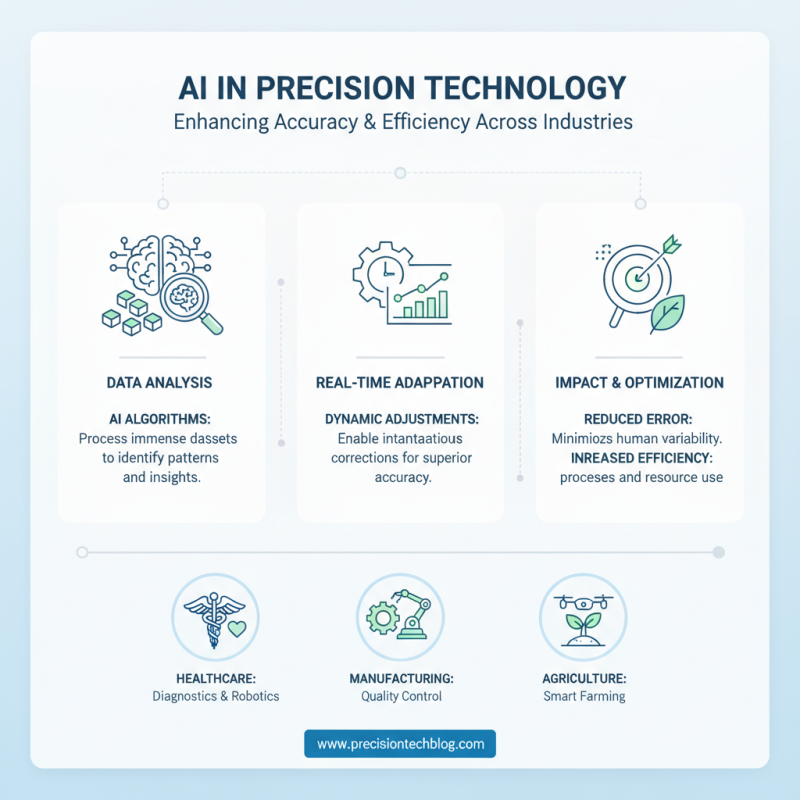
Precision technology is rapidly evolving, with artificial intelligence (AI) playing a crucial role. AI algorithms analyze vast amounts of data to improve accuracy in various fields. Whether in healthcare, manufacturing, or agriculture, AI enhances precision by making real-time adjustments. This capability reduces human error and increases efficiency.

Tips: Consider adopting AI tools to streamline processes. They can provide insights that traditional methods might miss. Embracing these technologies will position businesses for success.

AI not only boosts precision but also prompts reflection on ethical concerns. Relying heavily on algorithms can make organizations complacent. They might overlook the importance of human intuition and expertise. Balancing technology with human insight remains vital for achieving optimal outcomes.

Tips: Regularly evaluate the integration of AI. Are you still making human-driven decisions? Encourage team discussions to ensure a holistic approach. This will prevent over-dependence on technology and foster innovation.

Future Trends in Precision Technology for Sustainable Development

Precision technology plays a crucial role in sustainable development. As we strive to create a more environmentally friendly future, innovative solutions are emerging. These technologies aim to reduce waste and enhance efficiency across various sectors. For instance, smart agriculture utilizes sensors to monitor soil health and crop conditions, optimizing water and fertilizer use. Such practices can significantly lower resource consumption while maximizing yield.

However, not all advancements are flawless. The integration of precision technology can sometimes lead to over-dependence on data. Farmers and industries may overlook traditional practices that could complement modern techniques. This reliance can create gaps in knowledge and experience. It also raises concerns about data privacy and ethical considerations in technology use.

Moreover, there is a concern about accessibility. Not every community has equal access to these innovations. Disparities can hinder widespread adoption and limit the benefits to a select few. This reality necessitates careful consideration and planning. Balancing technological advancements with inclusivity is essential for truly sustainable development.

10 Best Precision Technology Innovations Shaping the Future

Innovation Description Impact on Sustainability Future Potential
Smart Agriculture Use of IoT and drones to monitor crops and optimize resources. Reduces water usage and chemical application. High potential for increasing food security.
3D Printing Additive manufacturing that reduces waste by creating products layer by layer. Minimizes material waste and allows for local production. Potential to revolutionize supply chains.
Wearable Health Tech Devices that monitor health metrics in real time. Promotes preventative healthcare and reduces healthcare costs. Growth in personalized medicine and early diagnosis.
Energy-efficient Manufacturing Technologies that optimize energy usage in production processes. Lowers carbon footprint and operational costs. Enhancement in sustainable manufacturing techniques.
Biodegradable Materials Innovations in materials that decompose naturally. Addresses plastic pollution and waste management issues. Promise for widespread use in packaging and consumer goods.
Blockchain Decentralized ledger technology ensuring transparency. Enhances traceability in supply chains, especially for ethical sourcing. Potential to revolutionize transparency across industries.
Quantum Computing Computing technology that uses quantum bits for processing data. Could solve complex environmental issues faster. Long-term potential in various fields, including climate modeling.
Smart Grids Electricity supply networks that use digital technology. Improves efficiency and integrates renewable energy sources. Strong potential for sustainable urban development.
Artificial Intelligence Machine learning and algorithms used to improve efficiency. Optimizes resource usage and reduces waste across industries. The potential to enhance decision-making processes significantly.
Recycling Innovations New methods and technologies for better material recovery. Increases efficiency in waste management and materials reuse. Holds promise for a circular economy model.