








Choosing a process technology partner is rarely a simple comparison of product pages. Global buyers must examine engineering depth, production reliability, service coverage, and long-term operating costs. A polished website proves very little. Factory evidence matters more.
This guide introduces seven process technology companies serving international industrial markets. The selection considers practical capabilities, including automation, process control, equipment integration, energy efficiency, and lifecycle support. It also considers how suppliers respond when conditions change. A solution that performs well in a laboratory may struggle with dust, humidity, unstable power, or limited local expertise.
Taiichi Ohno, the architect of the Toyota Production System, famously said, “Without standards, there can be no kaizen.” That principle remains relevant. Buyers need measurable standards before comparing vendors. Useful evidence includes uptime records, commissioning procedures, maintenance response times, and documented customer results.
The strongest companies do more than sell machines. They help customers reduce waste, stabilize output, and train operating teams. Still, no supplier is perfect. A company may offer advanced controls but lack regional technicians. Another may provide strong engineering but face longer delivery times. These weaknesses deserve attention, not polite avoidance.
This overview is designed for procurement leaders, plant managers, engineers, and investors evaluating global options. It combines technical judgment with practical buying questions. The ranking is not absolute. Project scale, industry conditions, budget, and local infrastructure can change the outcome. That is the uncomfortable part. Careful buyers should challenge every claim, request evidence, and test whether each company’s process technology fits the real factory floor.
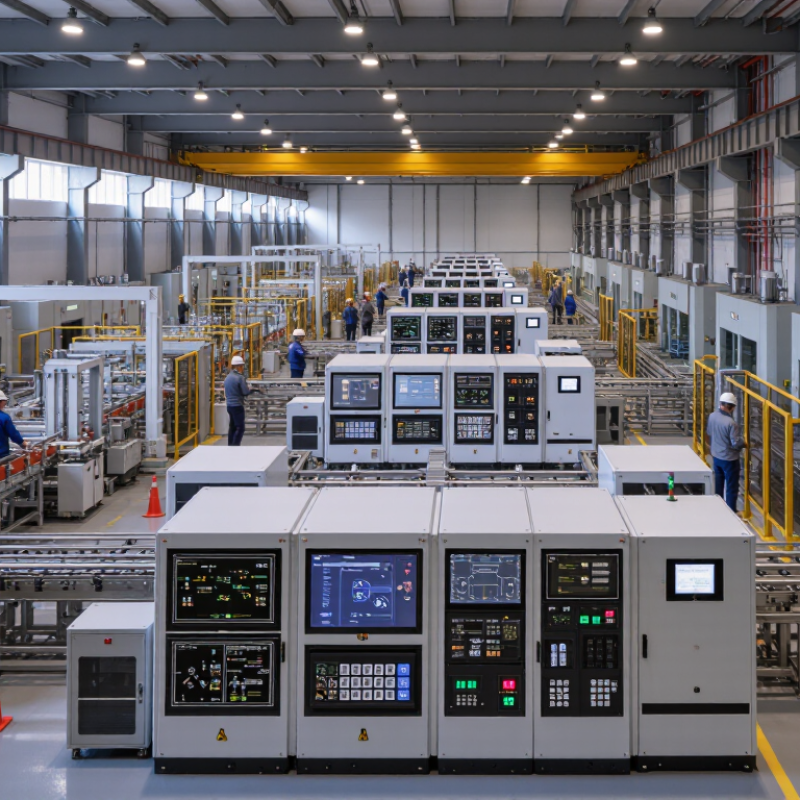
Process technology companies provide more than equipment. They design production systems, integrate controls, improve throughput, and support safer daily operations. Their work may cover feasibility studies, process simulation, automation, data platforms, and maintenance planning. The International Energy Agency’s Energy Efficiency 2023 report states that industry used about 37% of global final energy in 2022. This makes energy optimization a commercial priority, not a cosmetic upgrade.
Strong providers also deliver measurable lifecycle value. They can reduce waste, stabilize product quality, train operators, and document compliance requirements. Deloitte’s 2024 Smart Manufacturing and Operations Survey found that 86% of manufacturers viewed smart manufacturing as important for competitiveness. Yet digital tools alone cannot repair poor process discipline. That weakness is often underestimated. Buyers should request performance baselines, commissioning records, cybersecurity controls, and clear support terms. Independent references from similar facilities remain more useful than polished presentations.
Tips: Compare suppliers using energy intensity, uptime, safety performance, integration capability, and total ownership cost. Ask for a site-specific pilot before approving a full rollout. Check whether engineers understand local utilities, workforce skills, environmental rules, and spare-parts logistics. Leave room for honest uncertainty. Forecasts can fail when feedstock quality, weather, or operator behavior changes. A reliable partner explains those risks clearly and updates the plan with evidence.
Global buyers should evaluate process technology firms beyond product brochures. Start with proven experience in your industry, process scale, and operating environment. Ask for measurable results from comparable installations, such as yield improvement, energy savings, uptime, and maintenance hours. Request references from sites with similar climate, workforce skills, and production targets. A polished presentation is not evidence.
Technical depth matters. Review process design methods, testing procedures, automation compatibility, cybersecurity controls, and documentation quality. Confirm whether the supplier can support commissioning, operator training, spare parts, and upgrades over the full equipment lifecycle. Examine certifications, quality systems, warranty terms, and financial stability. During pilot testing, define acceptance criteria before discussing final performance. In my project reviews, I once trusted a strong efficiency claim without checking cleaning time. That mistake changed the purchasing decision. Some evaluations still miss this detail.
Tips:
Build a weighted scorecard before contacting seven shortlisted firms. Give separate scores for performance, safety, service response, total ownership cost, and delivery risk. Interview both engineers and recent customers. Ask difficult questions. What fails most often? Which assumptions could reduce output? A supplier that admits limitations may deserve more trust than one promising perfection. Also verify local service capacity, language support, training resources, and spare-part availability. Compare the complete operating picture, not only the initial quotation.
Seven leading process technology companies worldwide are increasingly judged by measurable performance, not polished sales claims. Global buyers should examine seven capabilities: process control, industrial robotics, machine vision, data platforms, energy management, advanced materials, and water treatment. Each supplier should show validated uptime, maintenance response, cybersecurity controls, and lifecycle costs. A factory floor reveals more than a brochure.
The International Federation of Robotics reported 541,302 industrial robots were installed worldwide in 2023. That figure shows how quickly automation is becoming standard across production environments. The International Energy Agency estimates industry consumes about 37% of global final energy. Efficient motors, heat recovery, and real-time monitoring therefore deserve equal attention. Technology must work beside operators, not merely replace them.
Field trials remain essential. Ask for production records, calibration procedures, and failure data from comparable sites. A useful supplier can explain its assumptions clearly. Not every digital platform delivers savings. Some projects still depend on weak data and rushed integration. Buyers should test one production line, measure results for several months, and then expand carefully. Seven global leaders may look similar, but their service networks, training quality, spare-parts access, and local compliance knowledge can differ sharply.
Seven Leading Process Technology Companies Worldwide
This anonymized comparison uses total reported global employees, shown in thousands and rounded, as a transparent indicator of organizational scale and international service capacity. The figures are based on FY2024 public annual-report disclosures.
Data dimension: Reported global workforce, FY2024 | Unit: Thousands of employees
Choosing the seven best process technology companies requires more than comparing equipment prices. Global buyers should examine industry fit, solution depth, and international delivery experience. A refinery needs heat integration and emissions control. A food plant needs hygienic design, traceability, and fast cleaning cycles. Pharmaceutical facilities demand validated systems and strict documentation. Fit matters more.
Energy performance deserves close attention. The International Energy Agency reports that industry consumed about 37% of global final energy in 2022. Buyers should therefore compare heat recovery, process control, electrification, and maintenance data. A credible supplier should show measured results from similar facilities, not only laboratory claims. The United Nations Industrial Development Organization also emphasizes digital production, resource efficiency, and resilient manufacturing in its recent industrial development research. These priorities affect both capital costs and long-term operational risk.
International capability is less visible but equally important. The World Bank’s Logistics Performance Index evaluates customs, infrastructure, shipment reliability, and logistics competence. Those factors shape installation schedules and spare-parts access. Ask whether engineers can work across local standards, languages, and safety requirements. Ask for regional service records. Seven companies may appear comparable on paper. They may not perform equally after commissioning.
My own concern is that buyers often overvalue advanced features and undervalue operator training. That judgment can be wrong, especially in smaller plants. Local support should be tested before contract signing.
Global buyers should judge process technology partners by measurable fit, not polished demonstrations. Rockwell Automation’s 2024 State of Smart Manufacturing Report found that 95% of manufacturers had invested, or planned to invest, in smart manufacturing within two years. That urgency can encourage rushed decisions. Examine each supplier’s experience with your process conditions, production volume, safety requirements, and regional regulations. Ask for verified performance data from comparable facilities. A strong partner should explain downtime assumptions, maintenance needs, integration limits, and total ownership costs clearly.
Energy performance deserves equal attention. The International Energy Agency reported that industry uses about 37% of global final energy consumption. Therefore, efficiency claims should include baseline figures, measurement methods, and expected payback periods. Review cybersecurity controls, data ownership, local service coverage, training, spare-parts access, and upgrade policies. Independent audits and customer references can reveal more than sales presentations. I would also test a small pilot before approving a full deployment. Pilots cost money, but poor assumptions cost more.
Tips: Build a weighted scorecard before contacting suppliers. Give technical fit, lifecycle cost, reliability, and service equal visibility. Request one reference site in a similar operating environment. Do not accept “up to” savings without operating evidence. A minor detail, such as a two-hour response gap, may become a major production problem. The cheapest proposal can be the least economical choice.
| Rank | Anonymized Provider Profile | Primary Process Technology | Core Industries Served | Typical Project Scale | Global Delivery Capability | Standards & Compliance | Integration Strength | Lifecycle Support | Best Fit for Global Buyers |
|---|---|---|---|---|---|---|---|---|---|
| 1 | Integrated Automation and Process-Control Specialist | Distributed control systems, safety instrumented systems, batch control, industrial software and plant analytics | Oil and gas, chemicals, refining, power generation, pharmaceuticals and water treatment | Large greenfield projects, complex brownfield upgrades and multi-site modernization programs | Established engineering and service resources across major industrial regions | Supports commonly adopted IEC, ISA, ISO, NFPA and regional industrial requirements | Strong connectivity between field instruments, control systems, safety layers, manufacturing systems and enterprise platforms | Remote monitoring, cybersecurity updates, operator training, spare-parts planning and long-term maintenance | Buyers seeking one partner for automation, safety, digitalization and plant-wide integration |
| 2 | High-Performance Rotating-Equipment Provider | Industrial compressors, gas turbines, steam turbines, pumps, drivers and rotating-equipment service systems | LNG, natural gas, power, petrochemicals, industrial gases and large manufacturing facilities | High-value equipment packages, compression trains and critical utility systems | International project execution with local commissioning and field-service capability | Equipment designs commonly aligned with API, ASME, IEC, ISO and applicable pressure-equipment codes | Mechanical, electrical, controls, condition monitoring and performance-management integration | Reliability engineering, predictive maintenance, overhaul services, field upgrades and operator support | Projects where availability, energy efficiency and rotating-equipment reliability are major priorities |
| 3 | Process-Equipment and Separation Technology Specialist | Heat exchangers, separators, filtration, distillation, evaporation, crystallization and process skids | Food and beverage, pharmaceuticals, chemicals, water treatment, mining and bio-based processing | Packaged units, modular process trains and engineered equipment for new or expanded facilities | Export-oriented manufacturing with regional engineering, installation and validation support | Can support hygienic design, pressure-vessel rules, GMP expectations, EHEDG principles and relevant ISO requirements | Strong process modeling, utility balancing, skid controls, equipment documentation and factory acceptance testing | Spare parts, refurbishment, process optimization, cleaning validation support and performance testing | Buyers requiring efficient separation, improved product quality or compact modular process systems |
| 4 | Water, Wastewater and Resource-Recovery Technology Provider | Biological treatment, membrane systems, desalination, sludge processing, reuse and water-quality monitoring | Municipal water, industrial wastewater, mining, food processing, power and chemical manufacturing | Municipal plants, industrial treatment systems, containerized units and phased capacity expansions | Experience adapting solutions to local water quality, climate, permitting and utility conditions | Designed around local discharge permits, drinking-water requirements, ISO systems and environmental regulations | Integrates process sensors, laboratory data, supervisory control, energy management and remote operations | Operations support, membrane replacement, biological optimization, compliance reporting and operator training | Organizations focused on water reuse, regulatory compliance, lower operating cost and resource recovery |
| 5 | Advanced Materials and Thermal-Processing Technology Provider | Industrial furnaces, kilns, heat-treatment systems, thermal reactors and materials-processing equipment | Steel, cement, ceramics, glass, battery materials, aerospace and specialty chemicals | Custom thermal lines, production furnaces and energy-intensive process installations | Global engineering support with region-specific construction, commissioning and service partners | Can address industrial safety, emissions control, pressure systems, electrical standards and environmental permits | Combines thermal modeling, combustion control, instrumentation, emissions monitoring and production analytics | Energy audits, refractory maintenance, burner upgrades, process tuning and emissions-performance support | Manufacturers prioritizing throughput, temperature uniformity, energy efficiency and emissions reduction |
| 6 | Digital Manufacturing and Industrial-Analytics Partner | Manufacturing execution systems, industrial Internet of Things, digital twins, asset performance and predictive analytics | Discrete manufacturing, chemicals, pharmaceuticals, food processing, energy and logistics | Plant digitization programs, multi-site rollouts and targeted operational-improvement projects | Cloud, edge and hybrid deployment models suitable for multinational operating environments | Supports industrial cybersecurity frameworks, data-governance controls, audit trails and common automation protocols | Connects operational technology with enterprise resource planning, quality, maintenance and supply-chain systems | Continuous software updates, data-quality management, user adoption programs and analytics model maintenance | Buyers seeking measurable gains in OEE, predictive maintenance, traceability and cross-site standardization |
| 7 | Decarbonization and Energy-Transition Technology Provider | Energy-efficiency systems, electrification, heat recovery, hydrogen-related equipment, carbon management and renewable integration | Heavy industry, refining, chemicals, power, transport fuels, mining and large commercial facilities | Pilot plants, demonstration systems, retrofit programs and utility-scale decarbonization projects | Often delivered through consortiums involving engineering firms, utilities, technology developers and local contractors | Requires project-specific alignment with environmental permits, electrical codes, process-safety rules and emissions-accounting standards | Links energy models, process controls, emissions monitoring, storage systems and operational reporting | Performance verification, optimization studies, technology scale-up and carbon-reduction reporting support | Organizations with science-based targets, high energy costs or regulatory pressure to reduce process emissions |
Evaluation note: Provider rankings are based on broad buyer criteria including process fit, engineering depth, international delivery capability, standards alignment, integration capacity, lifecycle service and long-term scalability. Profiles are intentionally anonymized and describe technology categories rather than company or brand-specific performance claims.