How to Choose the Best Small Cement Mixer for Concrete?
Choosing the right Small Cement Mixer Concrete can significantly impact your project’s success. These machines are essential for achieving consistent mixtures and efficient workflows. However, not all mixers are created equal. Different designs and features cater to various needs, from DIY enthusiasts to professional contractors.
When selecting a small cement mixer concrete, consider your specific requirements. Do you need a lightweight model for small jobs or a more robust mixer for heavy-duty tasks? Look for mixers with durable materials, such as steel or high-quality plastic. A reliable mixer should have a strong motor, ensuring thorough mixing without overheating.
User experiences can vary dramatically based on brand and model. Some mixers may excel in portability but lack power. Others may be efficient yet cumbersome. It is crucial to read reviews and consult with industry experts. Reflect on your project needs before making a decision. A well-informed choice can make a significant difference in your concrete mixing endeavors.
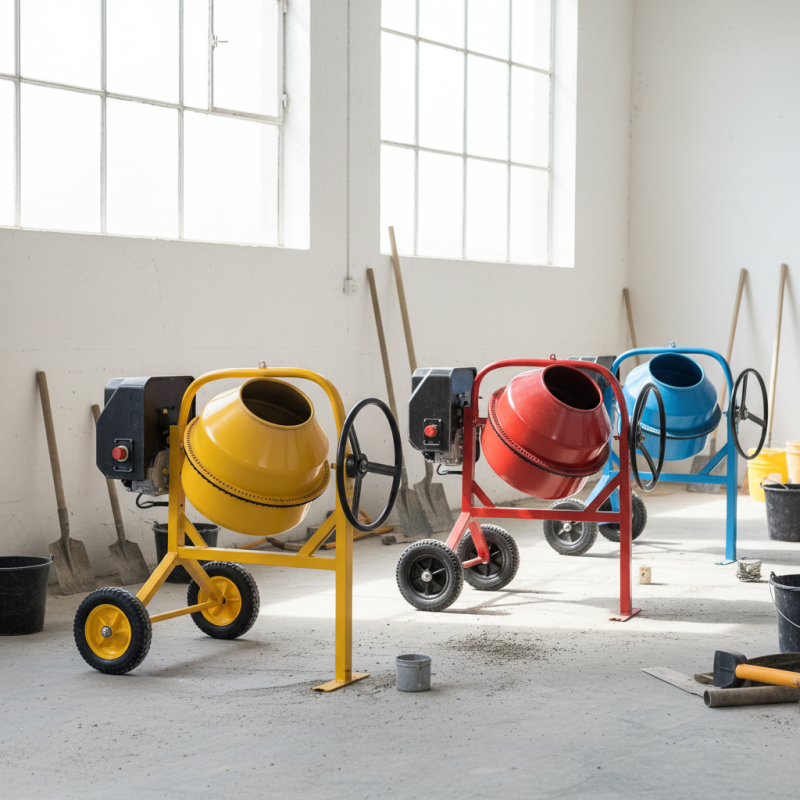
Understanding the Different Types of Small Cement Mixers
When selecting a small cement mixer, understanding the types available is crucial. The two primary types are portable mixers and stationary mixers. Portable mixers typically weigh less and can be moved easily, making them suitable for small projects or residential use. On the other hand, stationary mixers are more robust, designed for larger jobs or consistent mixing needs.
Portable mixers often come in various sizes, with capacities ranging from 2 to 6 cubic feet. A 3 cubic feet mixer can handle about 200 pounds of concrete, making it popular for DIY projects. Stationary mixers, however, can mix up to 10 cubic feet at a time, ideal for contractors needing efficiency.
Tips: Always consider your project scale. For small repairs, a 3 cubic feet mixer suffices. Ensure the mixer is easy to clean. This saves time and effort after a long day’s work.
Another point to ponder is durability. Some mixers may seem cost-effective but can wear out quickly. Check for reliable construction materials. Look for models that use steel frames for longevity and stability. Remember, investing in a quality mixer could enhance your productivity over time.
Key Features to Consider When Choosing a Small Cement Mixer
When selecting a small cement mixer, key features should guide your decision. Consider the mixer’s capacity. Models typically range from 2 to 6 cubic feet. A smaller model is more manageable for DIY projects. However, insufficient capacity may require multiple batches. Balance size and workload carefully.
Power and motor strength are crucial as well. Most small mixers have motors between 1/3 to 1 HP. A stronger motor enhances performance. It affects mixing efficiency and consistency of your concrete. Pay attention to the mixing speed as well. Higher speeds lead to a more uniform mix, which is vital for durability.
Durability cannot be overlooked. Small mixers vary in build quality. Steel models generally last longer than plastic alternatives. A sturdy frame resists wear and tear. Features like easy-to-clean surfaces can improve maintenance. Some reports indicate that well-maintained mixers can last up to 10 years. Also, the weight of the mixer influences portability. Check if the design offers balance when moving. A good mixer should offer ease of mobility for different job sites.
Assessing Mixer Capacity and Size for Your Concrete Needs
Choosing the right mixer involves understanding your concrete needs. Mixer capacity and size are crucial. A small mixer typically has a capacity of 2 to 3 cubic feet. This is suitable for small to medium projects, such as patios or walkways. According to industry reports, mixers under 3 cubic feet can produce approximately 180 to 240 pounds of concrete per batch.
Larger projects demand a different approach. A 5-cubic-foot mixer can yield 300 to 400 pounds in one go. This size suits larger foundations or driveways. Keep in mind, overloading a mixer can lead to inefficiency. Striking the right balance based on your project's scale is essential.
Tip: Consider the volume of concrete you need for your project. Measure the area and depth to determine the total cubic feet. Also, think about the frequency of use. If you mix regularly, investing in a robust model pays off in the long run. When in doubt, it's wise to consult experts or local resources for tailored advice. They provide valuable insights, leading to better decision-making.
How to Choose the Best Small Cement Mixer for Concrete? - Assessing Mixer Capacity and Size for Your Concrete Needs
| Mixer Size | Capacity (cu ft) | Weight (lbs) | Motor Power (HP) | Recommended Use |
| Compact | 3.5 | 60 | 1.0 | Small Projects |
| Standard | 5.0 | 85 | 1.5 | Medium Projects |
| Heavy-Duty | 7.0 | 120 | 2.0 | Large Projects |
| Portable | 4.0 | 70 | 1.2 | On-Site Jobs |
| Mini | 2.0 | 50 | 0.75 | Small DIY Tasks |
Evaluating Power Sources: Electric vs. Gasoline Mixers
When choosing the best small cement mixer, power source is crucial. Electric mixers typically provide a clean and quiet operation. They are perfect for indoor projects where noise could be an issue. Electric models often require less maintenance and are lighter, making them easy to move around. However, they rely on a power outlet, which limits their use outdoors or in remote locations.
Gasoline mixers, on the other hand, offer greater mobility. They are not confined by power cords. This makes them ideal for large construction sites or rural areas. Gasoline mixers can mix concrete much faster and handle larger volumes. However, they are noisier and produce fumes, which could be a concern during use. Regular maintenance is essential to keep them running effectively.
Both options come with trade-offs. Electric mixers provide convenience but may struggle with heavy loads. Gasoline mixers excel in power but can be cumbersome. Evaluating your specific needs will guide your decision. Consider where you’ll use the mixer most and how often.
Comparison of Power Sources for Small Cement Mixers
Budgeting for Your Small Cement Mixer Purchase and Maintenance Costs
When budgeting for a small cement mixer, consider your initial investment and ongoing maintenance costs. A quality mixer may range from a few hundred to several thousand dollars. Assess your project needs to determine the best fit. Sometimes, opting for a cheaper model can lead to future repair costs. Higher quality typically means better durability.
Maintenance costs can sometimes sneak up on you. Regular checks like oil changes and parts replacements are essential. Ignoring these can increase long-term expenses. It's wise to set aside 10-20% of the initial purchase price annually for maintenance. This ensures your mixer runs efficiently for years.
Remember, unexpected expenses can arise. You might need new mixing drums or wheels. Factor in these potential costs when planning your budget. Careful financial planning enhances your investment and allows you to complete projects efficiently. Each project comes with its own challenges. Reflecting on your budgetary choices can help you navigate those challenges better.