How to Choose the Right Towable Boom Lift for Your Project?
Choosing the right Towable Boom Lift for your project can be challenging. With various options available, it's crucial to consider your specific needs. These lifts are designed for versatility and convenience, making them a popular choice for job sites.
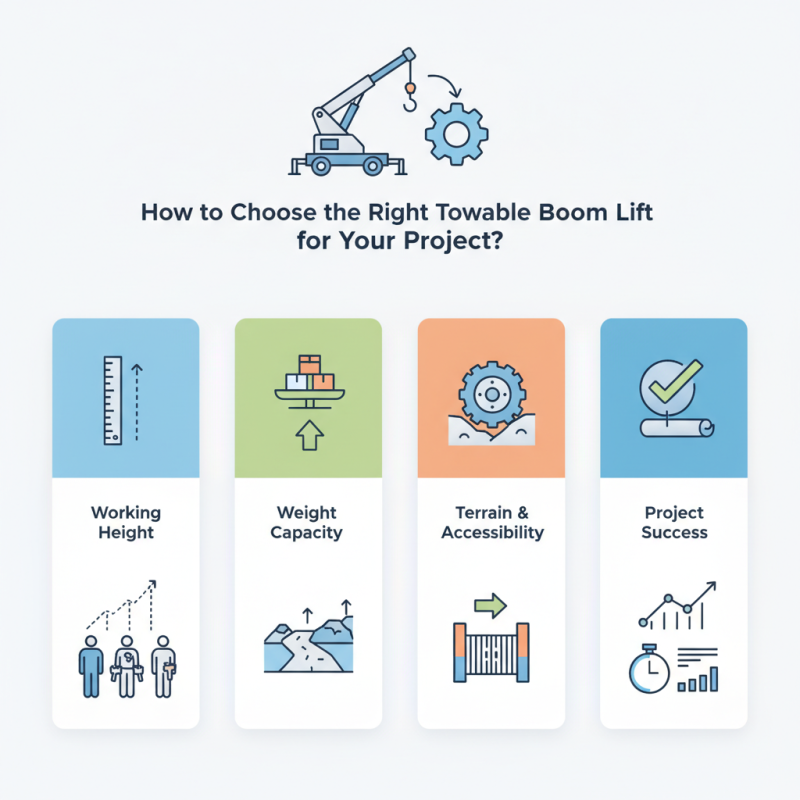
When selecting a Towable Boom Lift, think about the working height you require. Different models offer varying heights, impacting your project's execution. The weight capacity is another key factor. Ensure the lift can handle the load you'll be carrying. However, it’s easy to overlook these details in a rush.
Consider the terrain as well. Some lifts perform better on rough ground than others. Reflect on accessibility too. Is it easy to transport? Will it fit through standard gates or doorways? Such practical considerations can greatly affect your efficiency. Making the right choice in a Towable Boom Lift can significantly influence your project's success.
Understanding Towable Boom Lifts: An Overview of Features
Towable boom lifts offer versatile solutions for various projects. Understanding their features is crucial when selecting the right lift. They typically come with articulating or telescopic booms. Articulating booms navigate obstacles better, while telescopic booms extend higher. Choosing the correct type depends on your specific needs.
Another important feature is the working height. It can vary greatly among models. Consider the height required for your project to avoid issues later. The lift's weight capacity is also significant. A lift that can't handle your workload could lead to unsafe situations. Always double-check these specifications.
Mobility is another key aspect. Some models are lightweight for easy transport. Others might be bulkier, making transport challenging. Reflect on your job site layout. It could affect your choice significantly. Ensuring you select the correct towable boom lift is vital. Your project's success depends on it.
Assessing Project Requirements: Height, Reach, and Capacity Needs
When choosing a towable boom lift, assess your project requirements. Height is a key factor. Understand how high you need to work. Different jobs may require different heights. If you need to reach an elevated area, ensure the boom lift can extend far enough.
Reach is another critical element. Consider where you need to position the lift. The boom should have the ability to maneuver around obstacles. For example, if your project site has trees or buildings, make sure you can access those hard-to-reach spots.
Capacity is equally important. Know how much weight the lift can handle. It should safely accommodate the tools and workers needed for the job. Tips: Overloading can be dangerous. Always check the specifications. This will help you avoid accidents. Make sure to plan for any unexpected challenges on-site. Every project varies, so be flexible in your approach.
Evaluating Power Sources: Electric vs. Diesel Options
When choosing a towable boom lift, evaluating power sources is essential. Electric and diesel options offer distinct advantages and considerations. According to industry data, electric models are typically favored for indoor work. They run quietly and emit no fumes, making them suitable for confined spaces. A report by the Industrial Fabricators Association notes that electric lifts can reduce operational costs by up to 30% due to lower energy consumption.
Diesel lifts, on the other hand, excel in outdoor jobs. They provide higher power and longer run times. Reports indicate that diesel models can reach heights up to 150 feet, compared to 100 feet for some electric options. However, they produce emissions and noise, which may limit their use in certain environments. Users must consider factors like site conditions and regulations.
Perhaps more critically, the choice between electric and diesel impacts environmental factors. Electric lifts are becoming more popular as companies strive for greener operations. Diesel engines, though powerful, face increasing scrutiny for their environmental impact. A 2023 report from the Environmental Protection Agency highlights the need to balance power needs with sustainability goals. Choosing the right power source requires careful assessment of both project demands and ecological responsibilities.
Evaluating Power Sources for Towable Boom Lifts: Electric vs. Diesel
Safety Considerations: Ensuring Compliance and User Training
When operating a towable boom lift, safety must be a top priority. Operators should receive thorough training before using the equipment. This training includes familiarization with safety features and controls. Understanding weight limits and proper usage is also crucial. A well-prepared operator can prevent accidents and ensure the safety of themselves and others.
Compliance with local regulations is essential. Different regions may have specific safety standards for lift operations. These often cover everything from equipment inspections to operator certifications. It’s wise to check local laws and abide by them. This not only protects users but also helps in avoiding possible fines or legal issues.
Regular safety meetings are also beneficial. These meetings reinforce the importance of adherence to safety protocols. They provide a platform for workers to voice concerns. Discussing past incidents can lead to improvements in safety practices. It’s vital for everyone to feel responsible for maintaining a safe work environment. A culture of safety can greatly reduce risks on any project.
How to Choose the Right Towable Boom Lift for Your Project? - Safety Considerations: Ensuring Compliance and User Training
| Feature | Description | Safety Compliance | User Training Requirements |
| Weight Capacity | Typically ranges from 500 lbs to 1,000 lbs based on model. | Must adhere to ANSI and OSHA standards. | Operators must complete a certified training program. |
| Platform Height | Can range from 30 ft to 60 ft. | Ensure compliance with local building regulations. | Training on safe operation at various heights required. |
| Stabilization Features | Includes outriggers or stabilizing legs for safety. | Must meet industry stability standards. | Operators should be trained on setup and functionality. |
| Size and Weight | Varies; consider transport dimensions. | Must be compliant with transport regulations. | Training on safe loading and transport essential. |
| Electrical Requirements | Some require access to power sources; check specifications. | Make sure all electrical systems are up to code. | Training on electrical safety may be necessary. |
Budgeting: Cost Factors and Rental vs. Purchase Decisions
When considering a towable boom lift, budgeting is crucial. Understand the cost factors involved in your decision. Towable boom lifts come with various price tags. Factors such as height, capacity, and features impact rental and purchase prices. Assess how often you’ll use the lift. Frequent use might justify a purchase, while occasional use leans toward rental.
Rental costs can add up quickly. Daily or weekly rates may seem reasonable. However, they accumulate over time. Compare rental costs to the overall price of ownership. Factor in maintenance, storage, and insurance for a purchased lift. Sometimes, hidden costs surface. It's essential to calculate those thoroughly to avoid surprises later.
Evaluate your project's specific needs. Consider duration and scope. If the project is short-term, renting might be wise. If you're tackling multiple projects, buying could be beneficial. It's essential to align choices with your budgeting strategy. Be realistic. Not every decision will be perfect, and sometimes adjustments are necessary along the way.