| Self-Shielded FCAW | A continuously fed tubular wire produces an arc while flux inside the wire generates shielding gases and slag. | No external shielding gas is normally required. | Commonly used on carbon steel and low-alloy steel, from light fabrication to heavy structural sections, depending on wire diameter and machine output. | Portable and suitable for outdoor work. Wind has less effect than it does on gas-shielded processes, and it offers good penetration for many steel applications. | Produces slag that must be removed. It can create more smoke and spatter than gas-shielded operation, and the finished bead may be less visible during welding. | Field repair, construction, structural steel, farm equipment, and work in locations where transporting a gas cylinder is impractical. |
| Gas-Shielded FCAW | A continuously fed flux-cored wire creates the arc, while an external gas protects the molten weld pool. | Usually supplied with carbon dioxide or an argon-based gas mixture selected for the wire and metal being welded. | Primarily carbon steel and low-alloy steel; commonly selected for medium-to-heavy plate and production fabrication. | High deposition rate, strong penetration, and good productivity. The arc and weld pool are generally easier to observe than with self-shielded wire. | Sensitive to wind and drafts. Requires a gas cylinder, regulator, hoses, and correct gas flow. Slag removal is still necessary. | Fabrication shops, pressure-related fabrication where qualified procedures permit it, heavy equipment, and controlled indoor production. |
| Dual-Shield FCAW | The flux-cored wire and external shielding gas work together to protect the weld pool and stabilize the arc. | Flux-generated shielding combines with an external gas, often carbon dioxide or an argon-based mixture. | Frequently used for carbon and low-alloy steels, particularly on thicker plate and structural components. | Can provide high deposition rates, deep penetration, and high-quality welds when the procedure is correctly controlled. | Less portable than self-shielded FCAW. It needs gas equipment, careful parameter control, and thorough slag removal between passes. | Heavy fabrication, structural assemblies, shipbuilding, industrial machinery, and multi-pass welds on thick steel. |
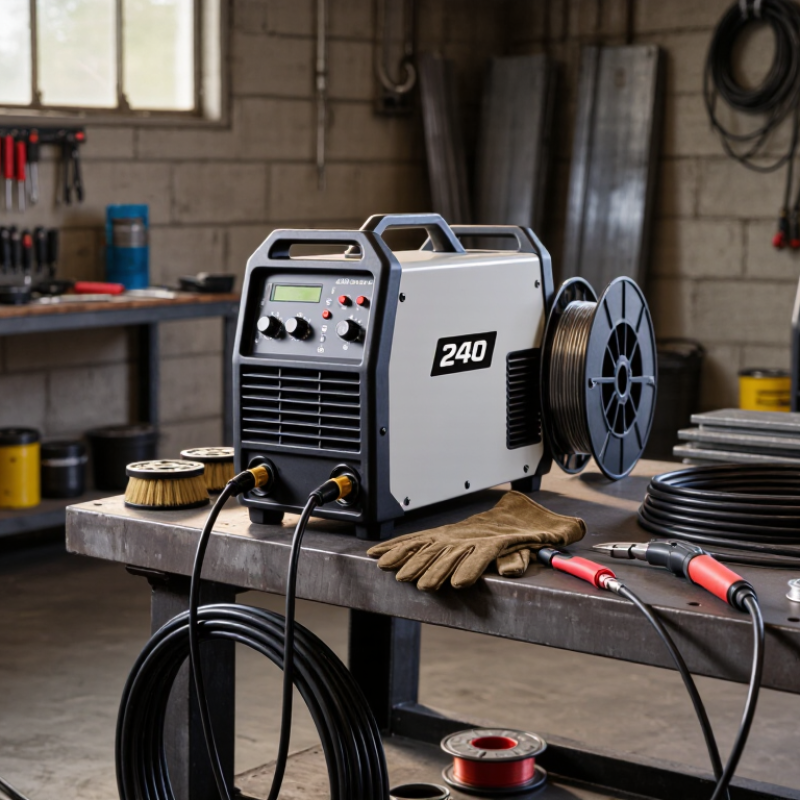
| Inverter Flux Core Welder | Uses high-frequency electronic switching to convert and regulate welding power instead of relying mainly on a large traditional transformer. | Can operate with self-shielded or gas-shielded flux-cored wire, depending on the machine configuration. | Suitable for steel fabrication and repair within the machine's rated output and wire-size range. | Lightweight, compact, and usually energy-efficient. Electronic controls can provide stable arc characteristics and convenient voltage or wire-speed adjustment. | May require more protection from dust, moisture, and impact than a basic transformer unit. Actual performance depends on input power and duty cycle. | Portable maintenance, workshops, mobile repair, and users who need a compact machine with adjustable settings. |
| Transformer Flux Core Welder | Uses a transformer to reduce and regulate input voltage while supplying welding current to the wire-feeding system. | Supports self-shielded or gas-shielded flux-cored operation when the machine is designed for that process. | Carbon steel and general fabrication within the unit's rated amperage and duty cycle. | Often mechanically simple, durable, and straightforward to service. It can provide stable output for repetitive shop work. | Typically heavier and less portable than an inverter. It may use more electrical power and offer fewer electronic adjustment features. | Fixed workshop stations, repair bays, and applications where portability is less important than simple, robust operation. |
| Single-Voltage Welder | Designed to operate from one specified input voltage and frequency. | May support self-shielded wire, gas-shielded wire, or both, depending on the machine controls and accessories. | Best for work performed in a location with a stable, compatible electrical supply. | Simple installation and operation, with fewer input-power decisions for the user. | Less flexible for job sites with different electrical systems. An improper power source can cause poor performance or equipment damage. | Dedicated home workshops, production areas, and repair locations with a known electrical supply. |
| Dual-Voltage Welder | Can be connected to two common input-voltage ranges, usually through the manufacturer's specified power connection or adapter. | Often supports both self-shielded and gas-shielded flux-cored operation when the required controls are included. | General steel repair and fabrication where work may occur in more than one location. | More flexible for mobile users. It can adapt to different power sources while maintaining the same basic welding process. | Output capacity may differ between input voltages. The operator must verify circuit protection, plug configuration, and the machine's rated output. | Contractors, maintenance technicians, mobile repair work, and mixed workshop or job-site use. |
| Manual Wire-Feed FCAW | The machine continuously feeds wire, while the operator controls travel speed, torch angle, stick-out, and weld placement. | Self-shielded or gas-shielded, according to the selected wire and setup. | Most common on carbon steel and low-alloy steel in repair, fabrication, and construction work. | Fast to set up and highly adaptable to changing joint positions and component shapes. | Weld quality depends strongly on operator technique. Incorrect travel speed, excessive stick-out, or poor angle can cause defects. | Custom fabrication, repair work, short production runs, and jobs involving many different joint positions. |
| Mechanized or Automated FCAW | A powered carriage or automated system controls torch travel or part movement while the wire feeder maintains a continuous arc. | Usually uses external shielding gas, although some mechanized systems can use self-shielded wire. | Best for repeatable welds on long seams, heavy plate, or components with consistent joint geometry. | Consistent travel speed, repeatability, and high productivity. It can reduce operator fatigue during long welds. | Higher setup cost and less flexibility for irregular parts. Joint fit-up, alignment, and parameter control must be consistent. | Production lines, long structural seams, large fabricated components, and repetitive welding operations. |