Top Micro Machining Techniques for 2026 Global Buyers?
In the rapidly evolving world of manufacturing, micro machining has become a pivotal technique for various industries. This technology enables the creation of intricate parts and components with extreme precision. The market for micro machining is expanding, particularly as industries seek innovative solutions to enhance product performance. As we look toward 2026, understanding the top micro machining techniques will be essential for global buyers.
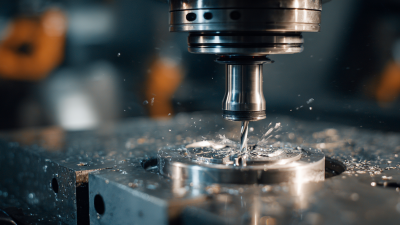
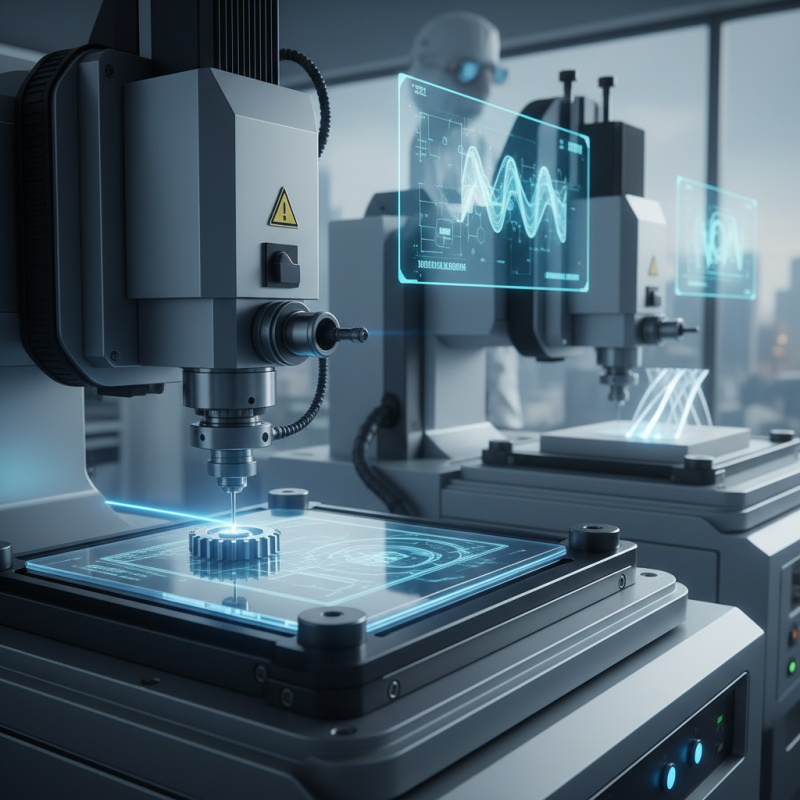
Micro machining involves multiple methods, each offering unique advantages. Techniques such as laser machining, electrical discharge machining (EDM), and advanced milling processes have gained traction. These methods enable manufacturers to produce highly detailed components, even at the microscopic level. As this field advances, buyers must remain informed about the latest trends and technologies to stay competitive.
However, navigating the micro machining landscape can be challenging. Some techniques may not meet specific requirements, or they could be less effective in certain applications. Buyers must evaluate the pros and cons of each method carefully. Not every technique will suit every task. Continuous learning and adaptation are crucial in this dynamic environment, ensuring buyers make informed choices tailored to their needs.
Top Micro Machining Techniques for 2026 Global Buyers
Micro machining is set to evolve significantly by 2026. This process is vital for various industries, including electronics, aerospace, and medical applications. According to a recent industry report, the global micro machining market is projected to reach $3.5 billion by 2026, growing at a CAGR of 7.2%. This growth is driven by the increasing demand for precision components in high-tech applications.
Innovative techniques are becoming essential. Laser micro machining stands out due to its accuracy and speed. This technique can create complex geometries on various materials. Another method gaining traction is electrical discharge machining (EDM). EDM offers high precision for intricate designs that conventional machining struggles with. Additionally, ultrasonically-assisted machining enhances performance by reducing tool wear and improving surface finish.
Tip: Prioritize sustainability. As eco-conscious practices rise, consider techniques that minimize material waste and energy consumption.
The challenges are notable. High costs and technical expertise remain barriers to entry for many companies. Moreover, maintaining quality control over micro-scale components is crucial. Addressing these issues will be key for businesses aiming for success in 2026.
Tip: Stay updated with industry trends. Knowledge of emerging technologies can provide a competitive edge.
Understanding the Market Demand: Projections for Micro Machining Growth
The micro machining market is set to expand significantly by 2026. As demand increases, industries such as electronics, aerospace, and medical devices will lead. These sectors require precision components. Understanding market dynamics is crucial for buyers. Analysts predict a compound annual growth rate (CAGR) of around 10%. This growth indicates rising needs for micro components across various applications.
Tips: Investing in training for your team can enhance capabilities. Consider adopting new technologies early, as they drive efficiency and accuracy. Staying ahead of trends helps avoid falling behind competitors.
Professionals in micro machining must adapt rapidly. The importance of material selection cannot be overstated. Innovative materials can greatly improve performance. Yet, not every new material works well for all applications. It’s vital to assess compatibility. Testing prototypes is an essential step before full-scale production.
Tips: Always keep a checklist for material testing. Regularly review project outcomes for continuous improvement. Engaging with suppliers can provide insights into upcoming trends. This dialogue fosters better decision-making in your supply chain.
Key Technologies Driving Micro Machining: Laser, EDM, and Ultra Sonic
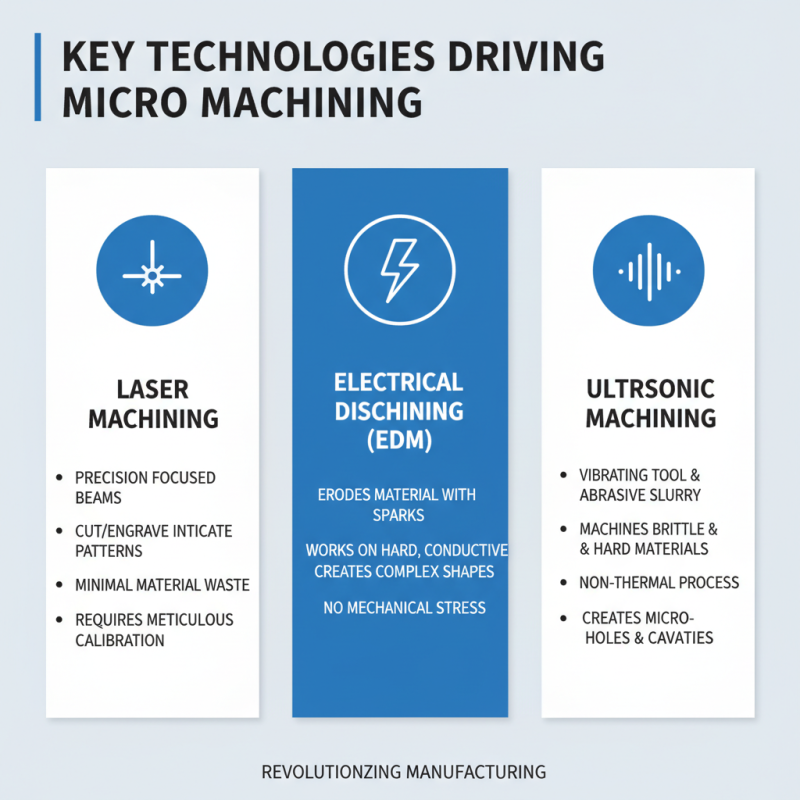
Micro machining is revolutionizing manufacturing, driven by innovative technologies. Laser machining stands out for its precision. It utilizes focused beams to cut or engrave materials in intricate patterns. This technique allows for minimal material waste, enhancing efficiency. However, it requires meticulous calibration to achieve optimal results.
Electrical Discharge Machining (EDM) is another game-changer. It employs electrical sparks to shape conductive materials. The process is highly effective for creating complex geometries. Yet, the speed can vary, leading to longer production times. Operators must remain vigilant to avoid overexposure, which can compromise accuracy.
Ultra sonic machining utilizes high-frequency vibrations to detach material. This method offers unique advantages, especially with brittle substances. While effective, it may not be as widely adopted due to equipment costs. Each of these techniques exhibits strengths and weaknesses, emphasizing the need for careful selection based on specific project needs. Understanding these nuances can lead to better decision-making for global buyers in 2026.
Material Considerations: Best Practices for Machining Various Substrates
When considering micro machining techniques for various substrates, material selection is crucial. Different materials respond uniquely to machining processes. Metals, ceramics, and polymers each have distinct properties, influencing cutting speed, tool wear, and surface finish. For metals, high-speed steel tools may excel, while ceramics often require diamond-coated tools for efficiency. Understanding these nuances ensures optimal outcomes.
Tips for machining different substrates include using appropriate speeds and feeds. Adjusting your parameters based on material type can greatly enhance performance. For example, softer materials should not be machined with excessively high speeds, as this causes melting. On the other hand, hard materials like titanium benefit from slower, steady speeds to avoid tool wear. Regularly revisiting your machining strategy enhances process reliability.
Pay attention to coolant usage as well. A suitable coolant can prolong tool life and improve surface finishes. However, using too much coolant can lead to contamination of the workpiece. Reflecting on your coolant application and material pairing is essential for achieving the desired results. Continuous assessment and adjustment are vital in micro machining.
Future Trends: Automation and AI in Micro Machining Processes
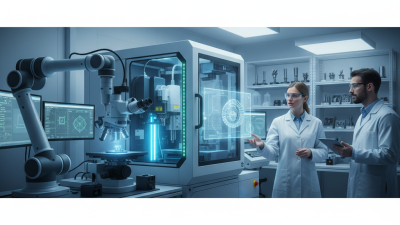
The integration of automation and AI is reshaping micro machining processes. Industry reports indicate that by 2026, 40% of micro machining operations could be automated. This shift will enhance precision while reducing human error. Automated systems can operate continuously, increasing productivity. This is crucial for sectors like electronics, where micro components are essential.
Artificial Intelligence plays a vital role too. With machine learning algorithms, micro machining can achieve unprecedented efficiency. Data analysis reveals that AI can predict tool wear and optimize cutting paths. This capability allows for better resource management. However, reliance on technology raises concerns. What happens when systems fail?
Investing in automation and AI requires careful planning. Not all machines can easily adapt to new technologies. Companies must retrain their workforce. Will the investment lead to significant improvements? Industry experts suggest a cautious approach, balancing technology with human skills. This evolution in micro machining is promising but not without its challenges.
Conclusion
The article "Top Micro Machining Techniques for 2026 Global Buyers" explores the evolving landscape of micro machining, focusing on its anticipated growth in the coming years. It highlights the increasing market demand for precise machining solutions, driven by advancements in key technologies such as laser cutting, electrical discharge machining (EDM), and ultrasonic machining. Best practices for handling various substrates are discussed, ensuring optimal results in micro machining applications.
In addition, the article addresses future trends, notably the integration of automation and artificial intelligence in micro machining processes, which promise to enhance efficiency and precision. A global comparison examines leading regions excelling in micro machining innovation and production, emphasizing the competitive nature of this specialized manufacturing sector. Overall, the insights provided present a comprehensive overview of the micro machining landscape and its projected advancements by 2026.