China Top 10 Technology Applications for Global Buyers
China Top 10 Technology Applications for Global Buyers examines practical solutions shaping international sourcing, production, and distribution. These technology applications range from industrial robotics and electric vehicles to artificial intelligence, smart logistics, cloud platforms, and digital payment systems.
The market scale is substantial. The International Federation of Robotics reported 276,288 industrial robots installed in China during 2023. That represented more than half of global installations. The International Energy Agency also reported that China accounted for over 60% of global electric car sales in 2023. These figures show manufacturing depth, but scale alone does not guarantee suitability. Buyers still need to assess product quality, cybersecurity, interoperability, maintenance, and export documentation.
Evidence from the World Intellectual Property Organization adds wider context. Its Global Innovation Index 2024 ranked China 11th globally and identified 26 Chinese innovation clusters among the world’s leading clusters. This supports China’s growing role in applied research and commercial deployment. Yet, some figures are difficult to compare across regions. Definitions, reporting periods, and industry standards vary.
The strongest opportunity is often practical. A warehouse camera can identify damaged cartons. A collaborative robot can reduce repetitive lifting. A battery-management system can monitor temperature cell by cell. These details matter more than impressive slogans.
Global buyers should therefore review suppliers through verified certifications, technical demonstrations, factory audits, and after-sales records. Independent testing remains valuable. So does caution.
This guide highlights ten applications with commercial relevance, measurable use cases, and realistic purchasing considerations. It also recognizes limitations, because technology performance can change after installation. Reliable decisions require evidence, not excitement.
Smart Manufacturing and Industrial IoT: 276,000 Robots Installed in 2023 (IFR)
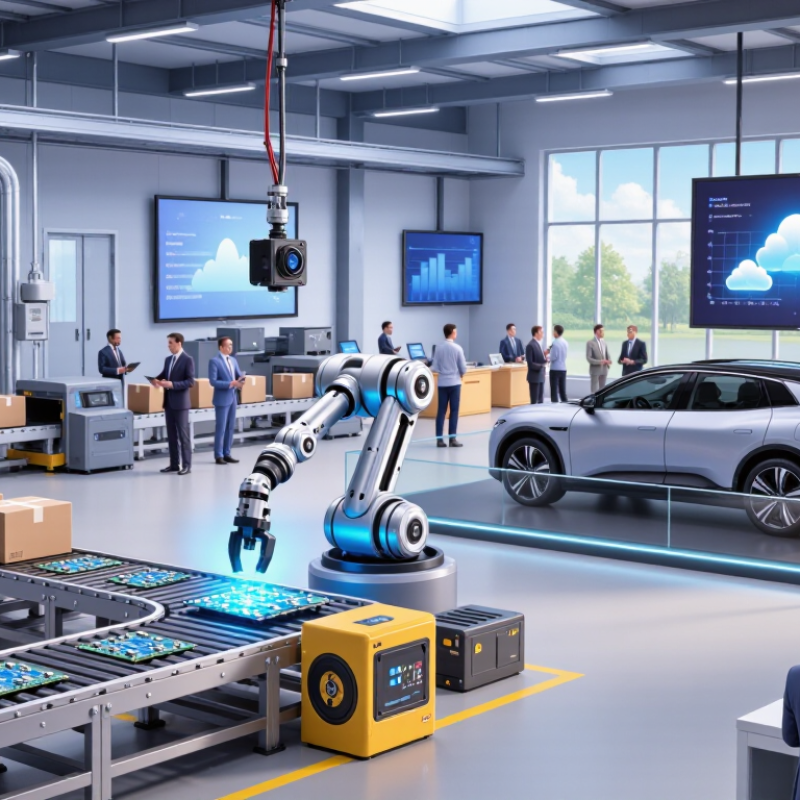
China’s smart manufacturing market is becoming a practical sourcing destination for global buyers. According to the International Federation of Robotics, 276,000 industrial robots were installed in China during 2023. The figure shows strong factory investment in electronics, automotive components, logistics, and precision assembly. The scale is visible. Robotic arms move beside conveyors, while vision cameras inspect surfaces and sensors track vibration, temperature, and cycle time.
For buyers, the value is not limited to automation speed. A connected production line can record defects, adjust workflows, and support preventive maintenance. This creates clearer production data and may reduce costly interruptions. Buyers should examine robot payload, operating reach, software compatibility, safety systems, and local service capacity. Worker training also matters. A technically advanced line can underperform when operators lack practical experience.
The number is impressive, but it is not a complete picture. Installation volume does not guarantee stable output, accurate integration, or fast returns. Data still needs context. Global buyers should request test reports, sample production records, cybersecurity measures, and maintenance schedules. They should also verify whether equipment meets destination-market safety and electrical requirements. In my view, the strongest projects combine automation with human oversight. A few manual checks may reveal problems that sensors miss. This is not a weakness; it is a reminder that smart factories still require careful judgment.
New-Energy Vehicles and Batteries: 12.87 Million Sold in 2024 (CAAM)
China’s new-energy vehicle market reached 12.87 million sales in 2024, according to the China Association of Automobile Manufacturers. This figure includes battery-electric and plug-in hybrid vehicles. It signals strong manufacturing capacity and growing consumer acceptance.
For global buyers, the opportunity extends beyond complete vehicles. China supplies battery cells, charging equipment, battery-management systems, electric motors, and thermal-control components. Buyers can find solutions for urban delivery fleets, private transport, public buses, and industrial vehicles. Many factories now provide digital production records, testing reports, and export documentation. These details help purchasing teams compare suppliers with greater confidence.
The scale is impressive. Still, the number needs careful interpretation. Sales volume does not automatically prove long-term reliability, service quality, or local compliance. A buyer should verify battery performance, warranty terms, recycling responsibilities, software support, and spare-part availability. Real operating conditions matter. A vehicle tested in a mild city may perform differently in extreme heat, cold, dust, or steep terrain. Charging access can also limit practical value.
Not every project needs the newest specification. Sometimes, a simpler battery system offers easier maintenance and lower training costs. Price comparisons can be misleading when shipping, certification, tariffs, and after-sales support are excluded. Buyers should request sample units, inspect production controls, and review independent test results before placing large orders. Mistakes remain possible, especially when technical terms are translated poorly. Clear contracts and measurable acceptance standards reduce that risk.
China’s new-energy vehicle sales increased from 1.21 million units in 2019 to 12.87 million units in 2024, according to data from the China Association of Automobile Manufacturers (CAAM). The figures include battery electric vehicles and plug-in hybrid vehicles.
5G Networks and Cloud Computing: 4.25 Million Base Stations by 2024 (MIIT)
China’s 5G infrastructure is becoming a practical foundation for global technology buyers. According to the Ministry of Industry and Information Technology, China had approximately 4.25 million 5G base stations by the end of 2024. This scale supports low-latency applications, including smart factories, connected logistics, remote equipment monitoring, and high-definition video inspection.
The network is not only about faster phones. 5G links factories with nearby cloud computing resources, reducing delays when machines exchange production data. The China Academy of Information and Communications Technology reported continued growth in cloud service adoption across manufacturing, finance, healthcare, and public services. For overseas buyers, this can mean flexible computing capacity without building every server locally. Edge processing also helps filter sensor data before it reaches a central cloud platform.
The numbers need careful reading. Base stations do not automatically guarantee equal coverage, stable indoor signals, or seamless cross-border data access. That distinction matters. The GSMA Mobile Economy Asia Pacific 2024 report identified China as a major driver of regional 5G adoption, while also noting different regulatory and deployment conditions across markets. Buyers should test latency, service continuity, data residency, and application compatibility before large procurement decisions. A promising pilot can still fail in a warehouse with metal shelving, weak indoor planning, or inconsistent cloud interfaces. Infrastructure scale is impressive, but practical performance remains site-specific.
Artificial Intelligence and Drones: Core Industries Exceeded RMB 500 Billion in 2023 (MIIT)
China’s artificial intelligence core industries exceeded RMB 500 billion in 2023, according to the Ministry of Industry and Information Technology. This figure reflects computing, algorithms, intelligent equipment, and related services. For global buyers, the opportunity is practical: visual inspection can flag surface defects, while language systems can process invoices, manuals, and service requests. The factory floor remains the test.
Drones are extending these capabilities into physical environments. The Civil Aviation Administration of China reported about 1.27 million registered civil unmanned aircraft in 2023, with more than 23 million flight hours. Typical applications include farm mapping, power-line inspection, warehouse counting, and emergency assessment. A camera can survey a large roof in minutes. Yet image quality changes with rain, glare, and battery limits.
The China Academy of Information and Communications Technology has repeatedly highlighted data quality, computing infrastructure, and governance as foundations for industrial AI. Buyers should therefore examine model accuracy, maintenance records, data ownership, and local compliance before signing contracts. Demonstrations can look impressive. Field performance may be less consistent. My practical concern is integration: a drone may collect useful images, but an outdated enterprise system may not use them. That gap deserves more attention.
Digital Commerce and FinTech: Online Retail Reached RMB 15.52 Trillion in 2023 (NBS)
China’s digital commerce market has become a practical gateway for global buyers. According to the National Bureau of Statistics, online retail sales reached RMB 15.52 trillion in 2023. Physical goods generated RMB 13.02 trillion, representing about 83.9% of the total. These figures show strong demand for product discovery, digital ordering, and faster supplier communication.
The payment layer is equally important. The People’s Bank of China reported approximately 185.07 billion mobile payment transactions in 2023, valued at nearly RMB 554 trillion. For overseas buyers, this ecosystem supports quicker confirmation, digital invoices, and more transparent payment records. A typical sourcing process may begin with a product search, continue through online negotiation, and end with electronic settlement and shipment tracking. Small details matter. A missing currency option can still delay a serious order.
The numbers are impressive, but they need careful interpretation. High transaction volume does not guarantee smooth cross-border trade. Buyers should check supplier credentials, product specifications, delivery terms, refund procedures, and data protection practices. The China Internet Network Information Center has also highlighted the continuing expansion of online services in its annual internet development reports. Yet digital convenience can hide weak verification. That remains a concern. Reliable technology should reduce uncertainty, not simply make transactions faster.