Top 10 Mezzanine Storage Rack Suppliers Worldwide
Choosing the right Mezzanine Storage Rack supplier can reshape warehouse capacity, workflow, and long-term operating costs. It is not simply a matter of adding another steel platform. The decision affects floor loading, access routes, picking speed, worker movement, and future expansion.
David J. Piasecki, a respected warehouse operations consultant, has said, “Inventory accuracy is the foundation of a successful warehouse.” His observation also applies to storage planning. A poorly designed mezzanine can create hidden problems. Misplaced columns may restrict forklifts. Narrow stairs can slow picking. Inadequate guardrails can create serious operational risks.
Details matter.
This guide examines the Top 10 Mezzanine Storage Rack Suppliers Worldwide through practical criteria. These include structural engineering, load capacity, modular design, safety features, installation support, customization, certifications, delivery reliability, and after-sales service. Each supplier should be assessed against the warehouse’s actual conditions, including ceiling height, floor strength, pallet dimensions, fire protection, and material-handling equipment.
Experience matters more than attractive brochures. A supplier may offer impressive drawings but provide limited site support. Another may charge more initially while reducing installation delays and maintenance concerns. That difference is easy to overlook.
The ranking is not absolute. Regional standards, project complexity, budget, and available service teams can change the best choice. Some information may also require direct confirmation from suppliers. Readers should verify technical specifications before making a purchase.
The strongest Mezzanine Storage Rack partners combine engineering discipline with practical warehouse understanding. They do not merely sell extra space. They help make that space usable, safe, measurable, and adaptable.
What Mezzanine Storage Racks Are and How They Work
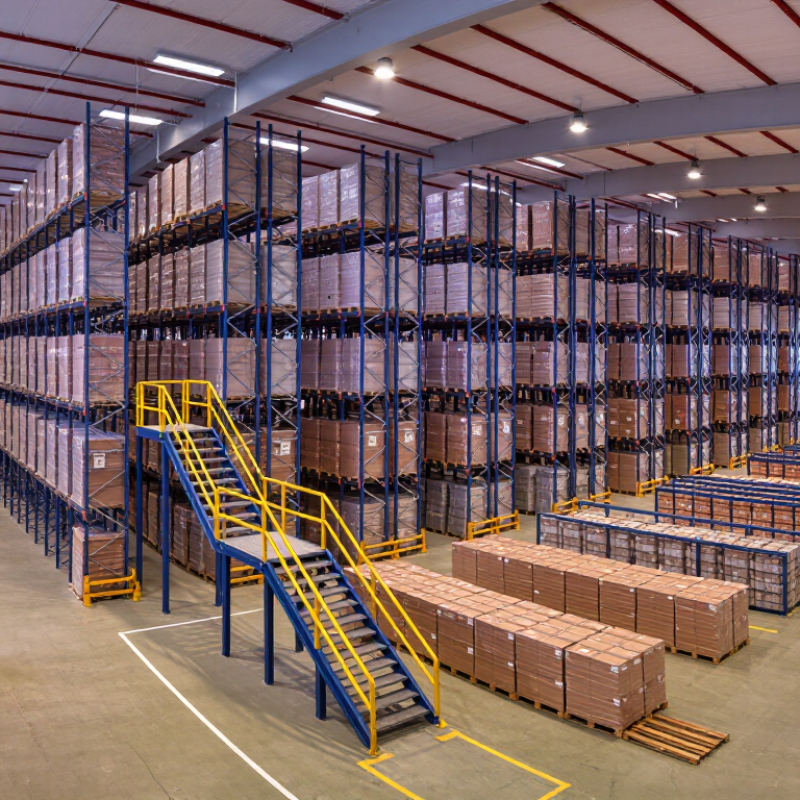
Mezzanine storage racks are raised storage systems that use vertical warehouse space without expanding the building footprint. A steel frame supports an upper deck, while pallets, cartons, or bins remain accessible below. Loads travel through beams, columns, base plates, and the concrete floor. The design must match the load, span, forklift traffic, and building condition.
MHI’s 2024 Annual Industry Report states that 91% of supply chain professionals expect to increase technology and innovation investment within two years. That pressure makes vertical storage attractive. A well-planned mezzanine can add picking space above and preserve ground-level movement below. Stairs, guardrails, pallet gates, lighting, and clear aisle markings make the system usable. Small details matter.
Safety is not optional. OSHA 1910.23 requires protection against falls near open-sided surfaces, while local codes may also require fire protection and structural review. Suppliers should provide load calculations, drawings, installation procedures, and inspection guidance. The best option is not always the tallest rack. A high platform may reduce access speed or overload an aging slab. In practice, measurements are often imperfect. Rechecking floor flatness and real pallet weights can prevent expensive mistakes. Ask for evidence, not promises.
How to Evaluate Mezzanine Rack Suppliers Worldwide
Evaluating mezzanine rack suppliers worldwide requires more than comparing quoted prices. A credible supplier begins with a site survey, not a glossy brochure. Ask for clear load calculations covering pallets, shelving, floor capacity, seismic exposure, and forklift impact. Request stamped drawings where local rules require them. Technical answers should explain steel grades, beam connections, decking, guardrails, stairs, and fire protection interfaces. Vague promises are warning signs.
Experience becomes visible in project evidence. Ask for recent installations with similar spans, heights, traffic patterns, and operating temperatures. Speak with customers, if permission is available, and inspect photos showing columns, bracing, access gates, and floor finish. A qualified supplier should provide installation methods, inspection records, maintenance guidance, and replacement-part details. Check whether engineers understand your country's building, workplace, and fire requirements. International coverage means more than shipping across borders. It requires reliable drawings, accurate translations, time-zone communication, and local installation support.
Commercial terms deserve the same scrutiny. Compare delivery milestones, warranty boundaries, change-order rules, training, and response times for damaged components. Confirm who coordinates permits and who accepts responsibility after installation. I would also test one technical question before signing: ask how the design changes if the stored load increases by 15 percent. The answer reveals flexibility. Do not ignore small inconsistencies. A missing dimension today can become an expensive site delay tomorrow. One honest limitation is useful. A supplier that admits what it cannot provide may be safer than one that promises everything.
Top 10 Mezzanine Storage Rack Suppliers Worldwide
How to Evaluate Mezzanine Rack Suppliers Worldwide
A practical supplier evaluation should prioritize structural safety, compliance documentation, load capacity, engineering capability, customization, installation support, delivery reliability, warranty coverage, total cost, and sustainability. The weighted scorecard below uses a 100-point procurement framework to compare suppliers consistently without relying on company or brand data.
Top 10 Mezzanine Storage Rack Suppliers Worldwide
The global mezzanine storage rack market includes suppliers with very different strengths. A credible Top 10 list should examine engineering depth, project experience, and after-sales support. Suppliers deserve attention when they provide stamped drawings, verified load tables, and clear installation procedures. Their systems should suit pallet traffic, carton picking, and changing inventory. A low price alone says little. It can hide weak floor analysis or expensive site modifications.
The strongest suppliers typically offer tailored layouts rather than fixed kits. They measure column spacing, ceiling height, slab condition, forklift routes, and sprinkler clearances. Good technical teams also discuss guardrails, stair access, decking, and impact protection. Their factories should maintain traceable steel records and documented quality checks. Independent inspections add confidence, especially for large or multi-site projects. Local code knowledge matters. Global delivery does not replace local responsibility.
When comparing ten worldwide suppliers, buyers should request references from warehouses with similar loads and operating hours. Ask how quickly damaged parts are replaced. Ask who supervises installation. Small details matter. Some proposals look polished but omit maintenance access or future expansion. I would also compare lead times, warranty wording, and communication across time zones. No ranking is perfect; site data can change the order. A careful buyer should revisit the list after receiving structural calculations and a physical survey.
Top 10 Mezzanine Storage Rack Suppliers Worldwide
| Rank | Primary Market | Typical System Type | Typical Platform Load | Typical Deck Height | Common Bay Width | Common Platform Depth | Design Standards | Indicative Lead Time | Installation Support |
| 1 | Western Europe | Rack-supported mezzanine | 300–1,000 kg/m² | 2.5–6.0 m | 1,800–3,000 mm | 600–1,500 mm | EN 1090; EN 15512 | 6–10 weeks | Full project support |
| 2 | North America | Free-standing structural mezzanine | 250–750 kg/m² | 2.4–5.5 m | 1,800–3,600 mm | 900–1,800 mm | RMI; IBC; OSHA | 8–14 weeks | Optional site installation |
| 3 | East Asia | Multi-tier picking platform | 200–600 kg/m² | 2.2–5.0 m | 1,500–2,700 mm | 600–1,200 mm | ISO 9001; FEM guidance | 4–8 weeks | Remote or local partner |
| 4 | Southeast Asia | Shelving-supported mezzanine | 150–500 kg/m² | 2.0–4.5 m | 1,200–2,400 mm | 450–1,200 mm | Local building code; ISO 9001 | 5–9 weeks | Partner installation available |
| 5 | Australia and New Zealand | Structural steel platform | 250–750 kg/m² | 2.4–5.5 m | 1,800–3,000 mm | 900–1,500 mm | AS 4100; AS/NZS 1170 | 8–12 weeks | Engineering and site support |
| 6 | Middle East | Heavy-duty storage platform | 400–1,000 kg/m² | 2.5–6.0 m | 2,000–3,600 mm | 900–1,800 mm | EN 1090; regional fire codes | 8–14 weeks | Turnkey installation |
| 7 | South Asia | Boltless modular mezzanine | 150–400 kg/m² | 2.0–4.5 m | 1,200–2,400 mm | 450–1,200 mm | IS 800; ISO 9001 | 4–8 weeks | Assembly guidance included |
| 8 | Latin America | Column-supported platform | 250–700 kg/m² | 2.4–5.0 m | 1,800–3,000 mm | 600–1,500 mm | Local seismic and building codes | 7–12 weeks | Regional contractor network |
| 9 | Eastern Europe | Pallet-rack-supported platform | 400–1,000 kg/m² | 2.5–6.0 m | 2,000–3,600 mm | 900–1,800 mm | EN 15512; EN 15629 | 6–11 weeks | Design and supervision |
| 10 | Africa | Light-to-medium-duty storage deck | 150–500 kg/m² | 2.0–4.5 m | 1,200–2,700 mm | 600–1,500 mm | EN standards; local building codes | 8–14 weeks | Remote planning and local installation |
Specifications are representative market ranges for comparable mezzanine storage rack systems. Final load ratings, dimensions, codes, delivery schedules, and installation arrangements must be confirmed through project-specific structural calculations and supplier quotations.
Comparing Supplier Products, Services, and Global Capabilities
Top 10 Mezzanine Storage Rack Suppliers Worldwide
Comparing the top ten mezzanine storage rack suppliers requires more than checking steel thickness or price. Product reviews should examine platform loads, clear heights, decking options, stair design, guardrails, and forklift access. A practical supplier can provide drawings, load calculations, installation guidance, and replacement parts. Details matter.
The 2024 MHI Annual Industry Report found that 74% of supply chain professionals planned to adopt robotics by 2027. This trend increases demand for mezzanines that support conveyors, lifts, scanners, and automated picking zones. Suppliers with modular frames and adaptable layouts deserve higher scores.
However, automation readiness should not hide basic weaknesses. Rack deflection, floor loading, fire protection coordination, and maintenance access still require careful review.
Global capability also changes the comparison. Strong suppliers offer regional engineering teams, multilingual documentation, consistent component standards, and reliable delivery across multiple countries. The World Bank’s Logistics Performance Index 2023 shows major differences in customs efficiency and infrastructure quality between markets. Therefore, delivery promises should include local installation capacity and spare-parts planning.
A low quote can still be the wrong choice. I would request two reference projects, a sample inspection record, and a clear warranty scope before approval. No supplier scorecard is perfect, especially when site measurements are incomplete.
How to Choose the Right Mezzanine Rack Supplier
Choosing a mezzanine storage rack supplier requires more than comparing quoted prices. Small design omissions can create expensive delays. Ask for drawings, load calculations, and installation records from similar facilities. Real experience matters. A supplier should explain how deck panels, stairs, handrails, and columns work together. Request a site survey before accepting a fixed proposal. Measure clear height, floor condition, aisle width, fire equipment, and forklift routes. Photos help, but they cannot replace measurements.
Check technical competence through documented engineering methods and inspection procedures. The supplier should state permitted loads, deflection limits, steel grades, surface treatment, and anchoring requirements. Ask who approves the structural design. Avoid vague answers. An independent review can reveal overlooked floor capacity or headroom problems. It may add cost. It can prevent rework. Verify manufacturing quality through traceable material records, weld inspections, dimensional checks, and packaging standards. Request installation training and clear maintenance instructions.
Reliability appears after delivery, not during a polished sales meeting. Speak with recent customers about response times, replacement parts, and unexpected site changes. Confirm warranty terms, delivery milestones, payment conditions, and support boundaries in writing. A capable supplier should provide risk controls for lifting, assembly, and access, while following local building and workplace requirements. Do not choose the most confident presenter automatically. A practical trial with real pallets and picking movements may expose awkward reaches or blocked exits before fabrication begins. Some attractive layouts fail because operators were not consulted early enough. That detail deserves another question.