Top 10 Plastic Injection Molded Parts for Global Buyers?
In the competitive world of manufacturing, plastic injection molded parts play a crucial role. These components are essential in various industries, including automotive, electronics, and consumer goods. Buyers often seek reliable suppliers for these parts to ensure quality and performance.
The demand for plastic injection molded parts continues to grow globally. Buyers must consider factors like material, design, and production capability. This complexity leads to a necessity for expertise in selecting the right suppliers and understanding market trends.
Companies must also reflect on the challenges in sourcing these parts. Quality control and supply chain issues can arise, impacting production schedules. Therefore, buyers should seek partnerships with manufacturers who demonstrate reliability and proven experience. Investing time in research will yield substantial returns in quality and customer satisfaction.
Top 10 Applications of Plastic Injection Molded Parts in Various Industries
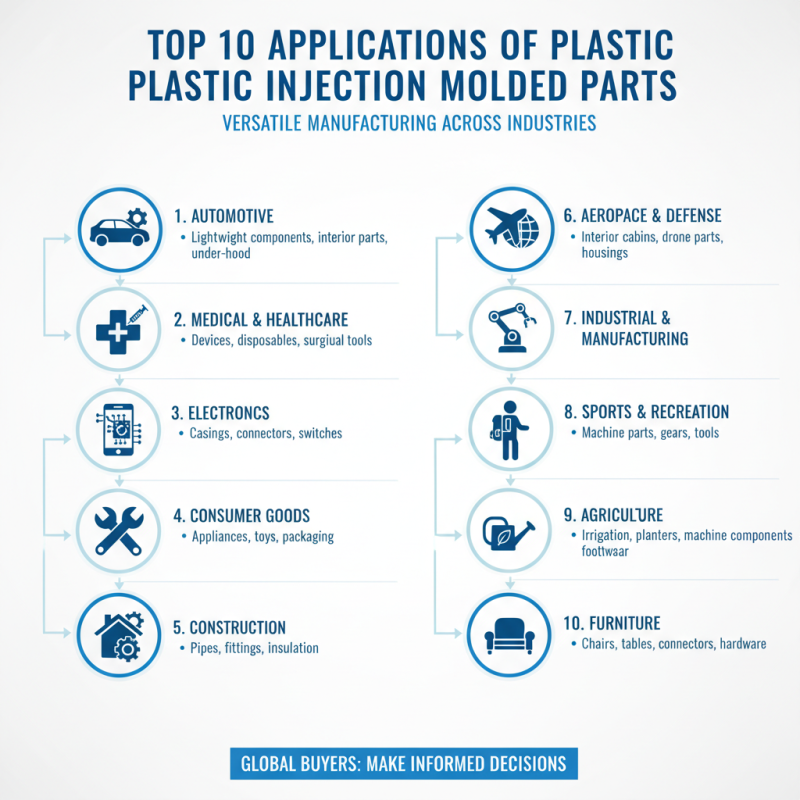
Plastic injection molding is a versatile manufacturing process. It has various applications across multiple industries. Understanding these applications helps global buyers make informed decisions.
In the automotive industry, components like dashboards and interior trims are produced using this method. These parts need to be durable and lightweight. Often, they undergo strict quality checks. In consumer electronics, casings and connectors are molded to ensure precision. These elements must fit perfectly to function well. In the medical field, items such as syringes and component housings are created. These components require compliance with health standards, presenting challenges that must be navigated carefully.
The packaging industry also benefits greatly from plastic injection molding. Containers and closures must be reliable and cost-effective. However, sustainable options are becoming more crucial. Environmental impact prompts manufacturers to reflect on recycling and material choices. As industries evolve, so too must the methods of production. Adaptability becomes key, ensuring that molded parts meet modern standards and consumer expectations.
Key Materials Used in Manufacturing Plastic Injection Molded Parts
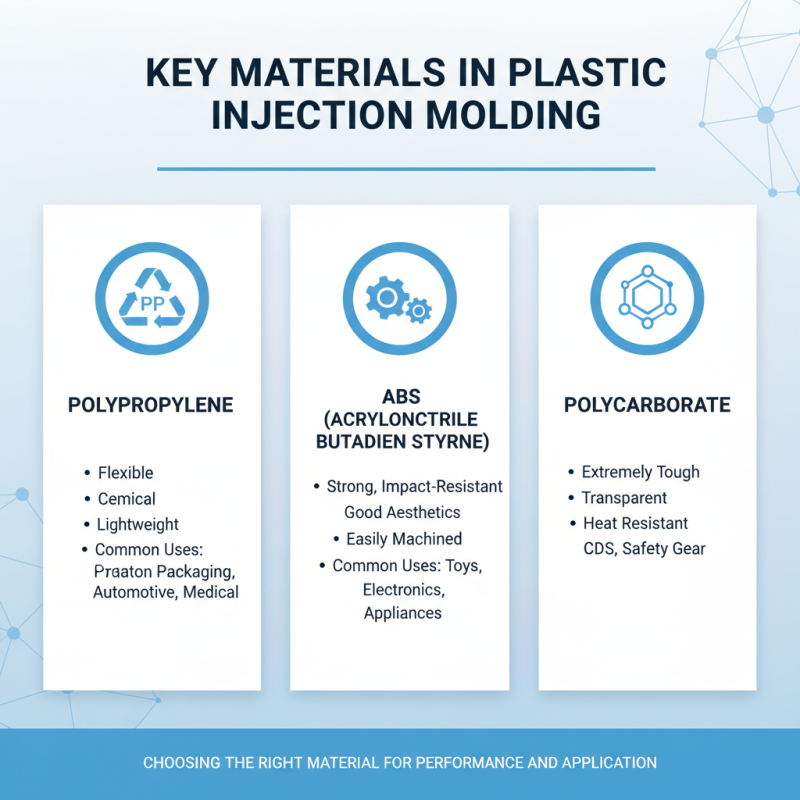
Plastic injection molded parts are widely used across various industries. The choice of materials plays a crucial role in their performance and application. Commonly used plastics include polypropylene, ABS, and polycarbonate. Each material offers specific benefits tailored to different uses.
Polypropylene, for instance, is lightweight and resistant to chemicals. It excels in automotive and packaging applications. ABS is known for its strength and rigidity, making it ideal for consumer electronics. Polycarbonate, valued for its transparency and impact resistance, is often used in safety equipment. While many materials are available, selecting the right one can be challenging.
It's essential to assess the demands of the application. Factors such as durability, weight, and cost often influence the decision. Sometimes, the cost-effective option may not meet performance needs. Testing and refining material choices can lead to better outcomes. Using advanced technologies and approaches, companies can push the boundaries of innovation in plastic molding. The landscape of materials is ever-evolving, prompting ongoing research and development efforts in the field.
Factors Influencing the Selection of Plastic Injection Molded Components
When selecting plastic injection molded components, several key factors come into play. Material properties are critical. Different plastics offer varying durability, flexibility, and resistance to chemicals. For instance, a recent study indicates that ABS plastic is popular for its toughness and heat resistance, while polypropylene is favored for its lightweight and cost-effectiveness.
Production scale is another consideration. Mold design significantly impacts manufacturing efficiency. High-volume production demands precision and speed. A report from the Plastics Industry Association highlights that optimizing injection speeds can improve cycle times by up to 30%. Additionally, cost considerations cannot be overlooked. Price points for materials can vary dramatically, influencing the final product price.
Sustainability is increasingly important. Many buyers now seek eco-friendly materials. Biodegradable plastics are gaining traction. According to industry data, about 40% of global buyers prioritize sustainable options when selecting components. This shift reflects a growing awareness of environmental impacts. However, balancing cost and sustainability often remains challenging for manufacturers and buyers alike.
Insights into Global Market Trends for Plastic Injection Molded Parts
The global market for plastic injection molded parts is witnessing significant growth. According to a recent report by Grand View Research, the market size is expected to reach $458.2 billion by 2026, growing at a CAGR of 5.4%. This expansion is driven by the rising demand in automotive, consumer electronics, and healthcare sectors. However, the market faces challenges, including fluctuating raw material prices and increasing environmental concerns.
In recent years, sustainability has become a focal point for manufacturers. Many companies are exploring bio-based plastics as alternatives to traditional materials. A study by Research and Markets indicates that sustainable materials are projected to capture a significant market share, increasing consumer preference for eco-friendly products. Despite this positive trend, the shift to sustainable options is often hindered by higher costs and limited availability.
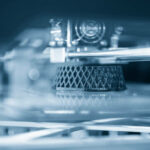
Moreover, the complexity of modern product design presents additional challenges. As industries push for more intricate and lightweight designs, mold makers must adapt. Many still rely on outdated techniques, which can compromise quality and efficiency. Experts suggest that investing in advanced technologies, such as 3D printing, can help improve both the design process and production capabilities. Balancing innovation and cost-effectiveness remains a crucial consideration in this vibrant market landscape.
Top 10 Plastic Injection Molded Parts for Global Buyers
Best Practices for Sourcing and Quality Control in Injection Molding Industry
In the injection molding industry, sourcing quality plastic parts can be challenging. Buyers must prioritize a reliable supplier who understands their specific needs. Evaluate potential partners based on their experience and expertise in your product category. A thorough review of past projects can reveal their capabilities. Don’t overlook the importance of communication. Clear dialogue with suppliers is crucial for addressing concerns promptly.
Implementing detailed quality control measures is essential. Inspections at various stages of the production process help catch defects early. Using tools like Statistical Process Control (SPC) can enhance production consistency. It’s worth considering that not every batch may meet your standards. Always keep an eye out for variations in material quality and manufacturing techniques. Engaging in regular audits of your suppliers can foster continuous improvement, even if they initially seem trustworthy.
Finally, don’t underestimate the significance of feedback loops. Collecting input from your team regarding product performance can lead to insightful adjustments. Remember that sourcing isn't a one-time event. It requires ongoing assessment and adaptation to maintain a successful partnership. Recognizing areas for improvement is a step toward achieving higher quality in your injection molded parts.
Top 10 Plastic Injection Molded Parts for Global Buyers
| Part Name |
Material Used |
Typical Applications |
Production Volume |
Lead Time |
| Automotive Dashboard |
ABS Plastic |
Vehicle Interior |
100,000 - 500,000 |
4-6 weeks |
| Consumer Electronics Case |
PC/ABS Blend |
Smartphones, Tablets |
50,000 - 300,000 |
3-5 weeks |
| Medical Device Housing |
Polycarbonate |
Diagnostic Equipment |
20,000 - 100,000 |
6-8 weeks |
| Household Appliance Parts |
Polypropylene |
Kitchen Tools |
200,000 - 1,000,000 |
3-4 weeks |
| Custom Gaskets |
TPR/TPV |
Sealing Applications |
10,000 - 50,000 |
2-3 weeks |
| Industrial Components |
Nylon |
Machinery |
15,000 - 75,000 |
4-5 weeks |
| Food Packaging |
PET |
Containers |
500,000 - 2,000,000 |
2-4 weeks |
| Toys and Games |
Acrylic |
Children’s Toys |
100,000 - 750,000 |
3-6 weeks |
| Sports Equipment Parts |
Polyethylene |
Fitness Gear |
20,000 - 100,000 |
4-6 weeks |