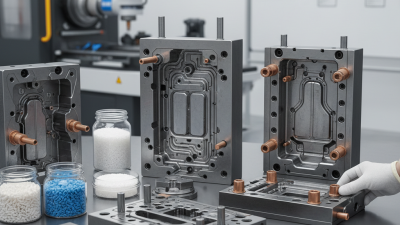
2026 Top Trends in Plastic Injection Tooling Innovations and Techniques?
The field of plastic injection tooling is rapidly evolving. Innovations in this area are reshaping the manufacturing landscape. Understanding these trends is crucial for industry professionals.
In 2026, we expect several key developments. Advanced materials and techniques will enhance efficiency. New software tools will streamline the design process. These innovations can reduce waste and lower costs. However, the shift may also pose challenges. Companies need to adapt quickly to stay competitive.
While embracing these trends, it is essential to reflect on best practices. Have companies fully optimized their current processes? Continuous improvement is necessary in the realm of plastic injection tooling. This ongoing evolution demands a proactive mindset among industry players. The future is bright, but adaptation is key.
Emergence of Smart Technology in Plastic Injection Tooling
The emergence of smart technology in plastic injection tooling is revolutionizing the industry. Smart sensors integrated into tooling machinery provide real-time data. This data helps to optimize production processes and reduce waste. By monitoring temperature and pressure during the injection process, manufacturers can ensure consistency and improve quality control.
Advanced AI algorithms are now analyzing vast amounts of production data. This analysis allows for predictive maintenance, minimizing downtime. Machine learning can identify patterns that human operators might miss. However, implementing these technologies requires a careful approach. Skilled workers need training to adapt to these innovations. Technological integration may also lead to challenges in traditional workflows.
Moreover, the reliance on smart technology raises questions about data security. Companies must ensure robust systems to protect sensitive information. Balancing innovation with these challenges is crucial. As the industry evolves, adapting to smart technologies will be key. The potential benefits are significant, but the path to achieving them is not always straightforward.
2026 Top Trends in Plastic Injection Tooling Innovations and Techniques - Emergence of Smart Technology in Plastic Injection Tooling
| Trend |
Description |
Potential Impact |
Implementation Status |
| Automation |
Integration of automated systems in the injection molding process. |
Increased efficiency and reduced labor costs. |
Ongoing |
| AI & Machine Learning |
Utilization of AI to optimize tooling designs and processes. |
Enhanced precision and predictive maintenance. |
Projected by 2026 |
| Sustainability |
Focus on eco-friendly materials and processes. |
Reduced environmental impact and compliance with regulations. |
In progress |
| Smart Sensors |
Integration of smart sensors for real-time monitoring and quality control. |
Improved product quality and reduced waste. |
Adoption phase |
| Cloud Computing |
Utilization of cloud-based platforms for data analytics and process management. |
Scalability and enhanced collaboration. |
Ongoing |
Advancements in Sustainable Materials for Injection Mold Manufacturing
The injection molding industry is undergoing significant change with advancements in sustainable materials. Many manufacturers are shifting their focus towards eco-friendly options. This change is not just a trend; it’s a necessity for the environment. Biodegradable materials are gaining popularity, providing an alternative to traditional plastics. These innovative materials often meet the same performance standards while reducing environmental impact.
However, the transition is not without challenges. Many manufacturers face difficulties in sourcing these sustainable materials. Often, supply chains lack reliable options. Furthermore, some companies still prioritize cost over sustainability. This short-sighted approach may hinder progress in creating a greener industry. Educating stakeholders on the benefits of sustainable materials is essential.
The future looks promising if these hurdles are addressed. Adopting sustainable practices can drive innovation. Industry players must collaborate to overcome obstacles. With the right focus, the injection molding sector can lead the way in sustainable manufacturing. The shift to eco-friendly materials is not just about compliance; it's an opportunity for long-term growth and responsibility.
2026 Top Trends in Plastic Injection Tooling Innovations
Innovative Cooling Techniques for Enhanced Production Efficiency
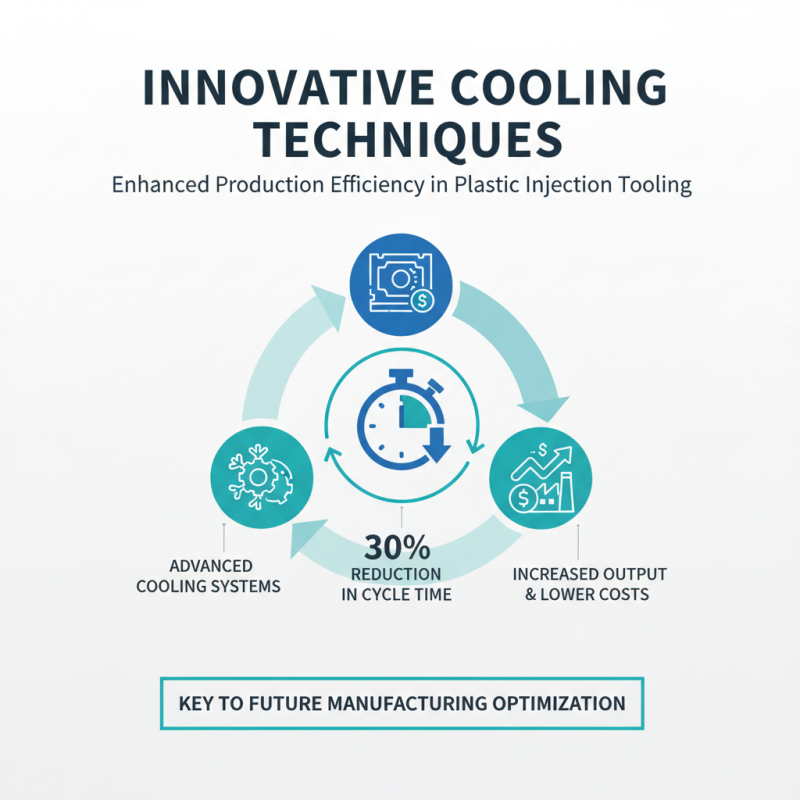
The future of plastic injection tooling is poised for significant advancements, particularly in cooling techniques. Innovative cooling methods have emerged as key to optimizing production efficiency. According to a recent industry report, improving cooling systems can reduce cycle times by as much as 30%. This reduction directly correlates with increased output and lower operational costs.
One promising approach involves conformal cooling channels. These are designed to follow the contours of the mold, allowing for consistent temperature control. Research shows that parts cooled uniformly achieve better quality and fewer defects. This reflects a shift towards more precise manufacturing processes. Despite these advancements, many companies still rely on traditional cooling methods, which can lead to inefficiencies.
There’s a clear need for continuous improvement in this area. While new techniques provide benefits, they also present challenges. The initial investment for advanced cooling systems can be prohibitive. Companies must balance cost with potential gains in efficiency. For example, facilities equipped with these cutting-edge systems report an increase in production rates, but adaptation can be slow. The industry is at a crossroads, seeking a delicate balance between innovation and practicality.
Integration of 3D Printing in Tooling Design and Prototyping
The integration of 3D printing into tooling design and prototyping marks a significant shift in the plastic injection molding industry. According to a recent report from the International Association of Plastics Engineers, 67% of companies have adopted 3D printing technology in their tooling processes. This has transformed how products are developed, allowing for faster turnaround times and reduced costs. The ability to produce complex geometries that traditional methods struggle with is another key benefit.
However, challenges remain. Many professionals still question the durability of 3D printed tools compared to conventional metal molds. Statistics reveal that while 3D printing can decrease lead times by 50%, the material strength does not always meet industry standards. This can lead to increased labor costs and time spent on iterations. Companies must evaluate whether the benefits truly outweigh these potential pitfalls in real-world applications.
With a growing emphasis on sustainability, the environmental impact of tooling practices is another area requiring reflection. A study by the Massachusetts Institute of Technology revealed that 3D printing can reduce waste by up to 70% in certain applications. However, the sustainability claims can be inconsistent across various 3D printing technologies. This highlights the importance of thorough research and an understanding of material properties when designing for the future.
Trends in Automation and Robotics within Injection Molding Processes
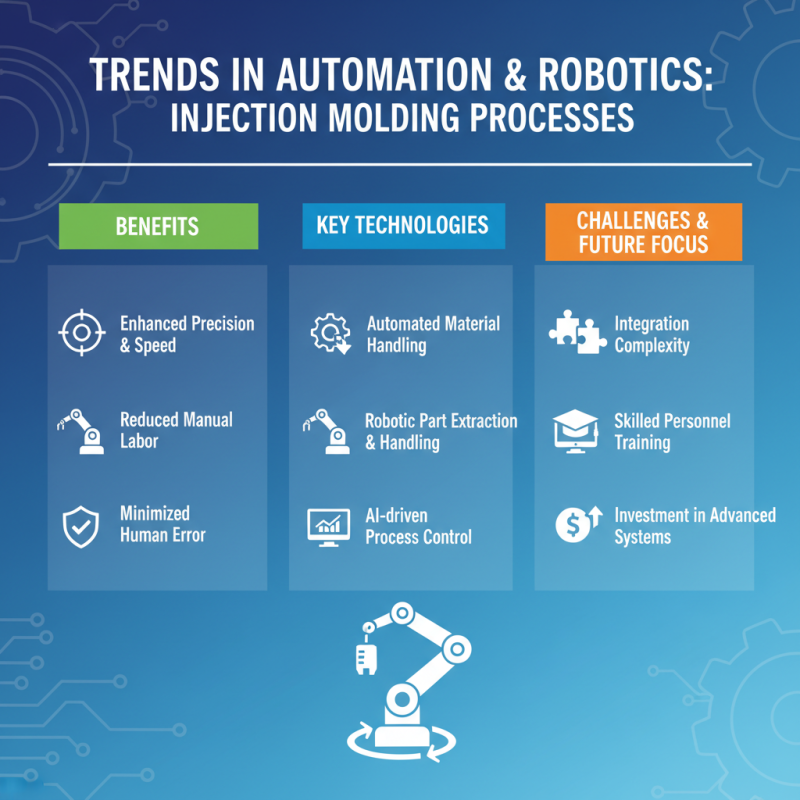
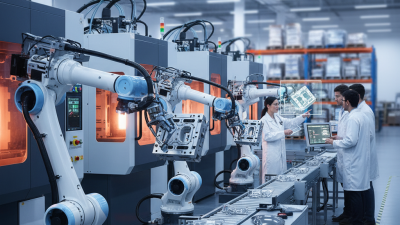
Automation and robotics are transforming injection molding processes. These technologies enhance precision and speed. They also reduce manual labor and human error, making production more efficient. However, challenges exist in integration and training. Businesses must invest in skilled personnel to operate these advanced systems.
Data-driven insights show that automated systems improve output consistency. Robotic arms can handle repetitive tasks with high accuracy. They work seamlessly with injection molding machines. This synergy leads to shorter production cycles. Despite this, the cost of automation can be a barrier for smaller companies. It’s crucial to weigh the benefits against the expenses.
Tips for implementing automation include starting small. Begin with one area before expanding. Also, ensure your team undergoes proper training. Understand the technology deeply before full-scale deployment. Regular maintenance of robotic systems is key. Neglect can lead to costly downtimes. Embracing change is vital, but do it wisely.