






2026 Top Trends in Plastic Injection Tooling Innovations?

As we venture into 2026, the landscape of plastic injection tooling is evolving. Innovations are shaping how industries approach design and production. These advancements are crucial for enhancing efficiency and quality in manufacturing processes.

Recent trends highlight the integration of smart technologies in plastic injection tooling. Automation and data analytics are becoming common features. These tools promise to optimize production cycles and reduce waste. However, reliance on technology can pose challenges. Not all companies can quickly adapt to these rapid changes.

Sustainability is another pressing concern in the industry. Many manufacturers are striving to create eco-friendly molds. This effort requires special materials and techniques that are not yet fully refined. Exploring these innovations presents both opportunities and obstacles. Overall, the future of plastic injection tooling is bright, yet it demands thoughtful consideration of its implications.
2026 Top Trends in Plastic Injection Tooling Innovations?

Emerging Technologies in Plastic Injection Tooling for 2026

The landscape of plastic injection tooling is set for significant transformation by 2026. Emerging technologies are reshaping production processes and designs, driving efficiency. According to a recent market research report, the global plastic injection molding market is projected to grow at a CAGR of 6.5% from 2021 to 2026. Innovations in automation and advanced materials are pivotal in this growth.

One notable trend is the integration of artificial intelligence into tooling. AI tools can analyze data from production runs to optimize designs and reduce waste. This technology is not just a novelty; companies that implemented AI saw improvements in their cycle times by up to 30%. However, the learning curve associated with AI can prove challenging for some manufacturers.

Additionally, the demand for sustainable practices is reshaping tooling innovations. Biodegradable materials are gaining traction, reflecting evolving consumer preferences. A recent survey showed that 70% of consumers consider sustainability crucial when choosing products. While such materials offer promise, they often require significant investment to adapt existing tools. Balancing sustainability with cost-effectiveness remains a complex challenge for many in the industry.

Sustainable Practices in Injection Tooling Innovations

Sustainable practices are reshaping plastic injection tooling innovations. The industry is now focused on eco-friendly materials and processes. Many manufacturers are exploring bioplastics as alternatives to traditional plastics. These materials can reduce the carbon footprint significantly. Innovations in design are also essential, emphasizing durability and reusability. Tools are being developed to minimize waste during production.

Using energy-efficient machines is another key aspect of sustainability. Investing in advanced technology can lead to significant savings and lower environmental impact. While many companies are adopting these methods, challenges remain. The initial costs can deter smaller manufacturers from making the switch. Additionally, there is a need for education on sustainable practices. Many in the industry are still unfamiliar with what this transition entails.

Collaboration across the supply chain can drive change. By working together, companies can share knowledge and resources. This partnership approach can lead to innovative solutions that benefit everyone. However, it is vital to remain vigilant about sustainability claims. Greenwashing can be tempting but undermines genuine efforts. Continuous improvement and accountability are essential as the industry moves forward.

Smart Automation and Its Impact on Plastic Injection Molding

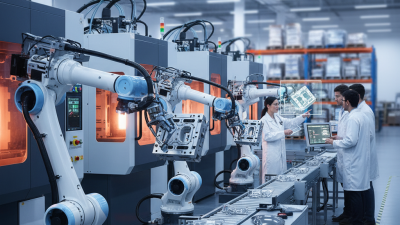
The landscape of plastic injection molding is evolving, largely driven by smart automation technologies. By 2026, an estimated 40% of injection molding processes are expected to incorporate advanced automation. This transition not only improves efficiency but also enhances precision in production. Automation reduces human error and ensures consistency in product quality, which is crucial in industries such as automotive and consumer goods.

Industrial reports indicate that productivity in automated environments can increase by up to 30%. This innovation, however, is not without its challenges. Manufacturers must invest in training and retraining their workforce to adapt to these technological changes. Resistance to change can hinder progress, as employees may feel threatened by automation. Addressing these concerns is vital for creating a collaborative environment where automation complements human skills.

Smart automation also enables real-time data analysis during the molding process. An initial investment may be required, but the potential for insight-driven decision-making is immense. However, companies must approach this technology with caution. Overreliance on automation can lead to vulnerabilities, especially if systems fail or produce faulty results. Balancing automation with traditional methods may often yield the most reliable outcomes.

Advanced Materials Transforming Injection Tooling Efficiency

The evolution of advanced materials is reshaping the efficiency of injection tooling. Manufacturers today are adopting lightweight composites and thermoplastics that reduce cycle times. These materials exhibit enhanced durability, resulting in less wear on molds and tooling components. The shift towards sustainable materials is also noteworthy. Bio-based resins are gaining traction, offering eco-friendly alternatives that maintain performance.

Embracing new technology further boosts productivity. Automation tools streamline setup and changeover processes, significantly cutting down operational delays. Robotics in assembly processes lead to precise and repeatable results, giving manufacturers a competitive edge. However, transitioning to these innovations involves a learning curve. Companies must invest in training to leverage these advancements fully.

Choosing the right materials is critical. Ensure compatibility with existing processes to avoid wastage. Consulting experts can guide material selection tailored to your production needs. Regular assessments of tooling performance can pinpoint areas for improvement, enhancing overall efficiency.

2026 Top Trends in Plastic Injection Tooling Innovations

Trend Description Impact on Efficiency Implementation Challenges
Smart Manufacturing Integration of IoT and AI in the production process. Increases automation, reduces downtime. High initial investment cost, skill gap.
Biodegradable Materials Use of environmentally friendly materials that decompose. Reduces environmental impact, promotes sustainability. Higher material costs, limited supplier options.
Additive Manufacturing Integration Combining traditional injection molding with 3D printing technologies. Enables rapid prototyping and customized designs. Technical compatibility issues, slower production speed.
Energy-efficient Machinery Tools that decrease energy consumption during operation. Lowers operational costs, improves sustainability. Need for retraining staff, upfront costs for upgrades.
Advanced Simulation Software Utilizing software for pre-production testing and tweaking designs. Improves design accuracy, decreases trial-and-error time. License costs, steep learning curve for software.

Customizations and Flexibility in Modern Injection Tooling Solutions

The landscape of plastic injection tooling is evolving rapidly, with a strong emphasis on customizations and flexibility. According to a recent industry report, companies that adopt advanced tooling solutions can reduce production time by up to 30%. This is crucial in today’s market where consumer preferences shift quickly. Flexibility in design is essential. Tooling systems that allow modifications on-the-fly can boost productivity and reduce costs.

Custom injection molds can now be tailored to specific project requirements. This customization not only enhances efficiency but also improves product quality. For instance, adjustable tooling components are being sought after, allowing adaptation to multiple designs without extensive reconfiguration. The shift towards sustainable materials also demands flexible tooling solutions capable of handling various polymers.

Consider integrating modular tooling designs. They provide versatility and can support a range of applications. Implementing quick-change mechanisms can further enhance productivity. However, relying heavily on customization may lead to increased complexity in management. Each unique design requires precise calibration and monitoring. Thus, ensuring a balance between customization and operational efficiency is key.

2026 Top Trends in Plastic Injection Tooling Innovations