Best Additive Manufacturing Processes in China
Choosing the best additive manufacturing processes in China starts with the part, its working environment, and its acceptance criteria. A lightweight aluminum bracket requires different capabilities than a transparent prototype or a patient-specific dental model. Process selection matters. China’s manufacturing ecosystem offers options across metal powder bed fusion, polymer extrusion, vat photopolymerization, and selective laser sintering. However, equipment availability alone does not establish production quality.
Neil Gershenfeld, director of MIT’s Center for Bits and Atoms, wrote, “A new digital revolution is coming, this time in fabrication.” His observation highlights the connection between digital design and physical production. For buyers evaluating Chinese suppliers, that connection must remain traceable through material records, build settings, and inspection results. Metal laser powder bed fusion can produce complex internal channels, but support removal and residual stress require careful planning. Stereolithography delivers fine surface detail, although resin properties and post-curing conditions can limit demanding applications. Selective laser sintering suits complex nylon components, with surface texture and dimensional variation requiring attention. Material extrusion often provides economical prototypes, while layer orientation strongly influences strength.
Details decide outcomes. Ask suppliers for inspection reports covering critical dimensions, documented material specifications, and examples of comparable finished parts. For metal components, clarify whether quoted prices include heat treatment, machining, and surface finishing. A visually impressive sample may still conceal inconsistent repeatability across builds. This comparison has limits: no single process wins across every material, geometry, budget, and production volume. The strongest choice comes from matching measurable requirements with demonstrated manufacturing capability.
China’s Additive Manufacturing Processes: ISO/ASTM 52900’s 7 Categories
Choosing additive manufacturing processes in China starts with the seven categories defined by ISO/ASTM 52900:2021. The European Patent Office’s 2023 report, Innovation trends in additive manufacturing, found rapid worldwide innovation. Between 2013 and 2020, international patent families in 3D printing grew by 26.3% annually, compared with 3.3% across all technologies. These figures describe patent activity, however, rather than Chinese production capacity or supplier quality. Evidence matters.
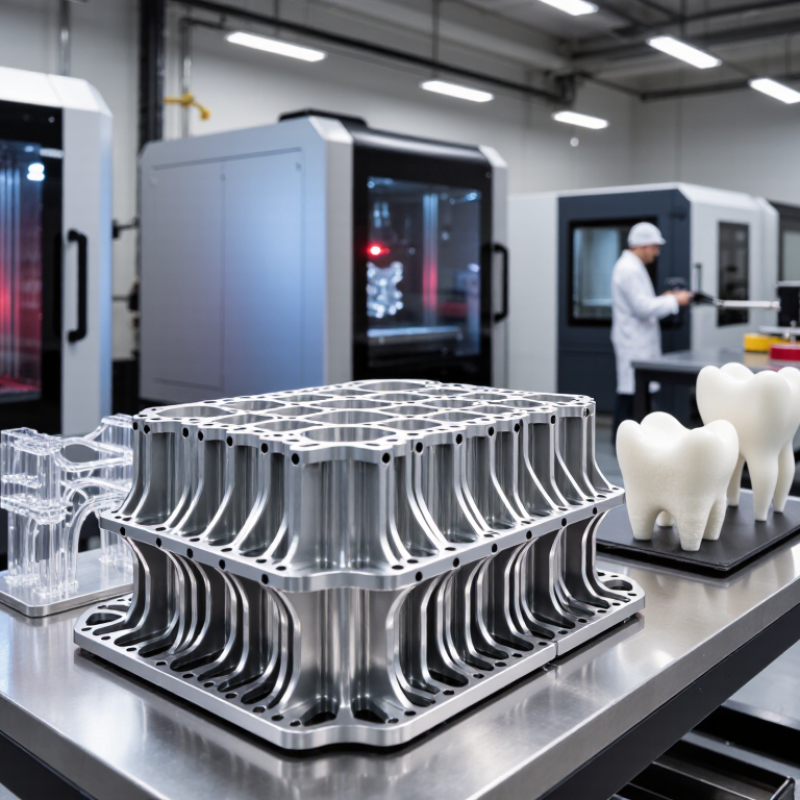
Material extrusion deposits material through a nozzle, making it practical for prototype housings and assembly fixtures. Vat photopolymerization selectively cures liquid resin, supporting detailed dental models and intricate prototypes. Powder bed fusion selectively joins powder using thermal energy, producing polymer components or complex metal parts. Binder jetting deposits a liquid bonding agent onto powder; metal versions typically require subsequent debinding and sintering. Material jetting deposits droplets of build material, enabling detailed visual models and, on suitable systems, multiple materials. These categories describe operating principles, but they cannot independently predict dimensional accuracy, mechanical performance, or cost.
Directed energy deposition
melts material as it is deposited, supporting component repair and feature addition.
Sheet lamination
bonds sheets together, with material choices and cutting methods affecting the finished part.
Check the details. When evaluating Chinese suppliers, request build orientation, material traceability, post-processing steps, and inspection results for comparable parts. A polished sample may conceal considerable finishing work. The uncomfortable gap is repeatability: one successful prototype provides limited evidence that fifty subsequent parts will meet the same tolerances.
FDM for Prototypes in China: Typical Layer Heights of 0.1–0.3 mm
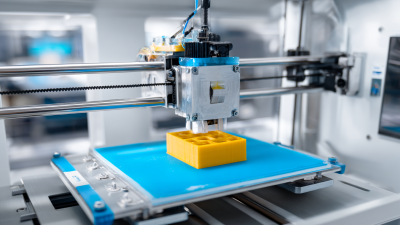
For prototype projects in China, fused deposition modeling (FDM) offers a practical way to evaluate shape, assembly, and basic function. Typical layer heights range from 0.1 to 0.3 mm, although suitable settings depend on nozzle diameter and geometry. A 0.2 mm setting is a reasonable starting point for many enclosure prototypes using a 0.4 mm nozzle. It balances visible detail with printing time. Layer lines remain visible. That may be acceptable when checking cable clearance or screw positions.
A 0.1 mm layer height can improve sloped surfaces and reduce stair-stepping on curved features. However, it cannot automatically sharpen every small hole or thin wall. Nozzle width, cooling, and material behavior also affect accuracy. At 0.3 mm, larger mockups can print faster, with more noticeable surface stepping. Check nozzle compatibility. Some providers may recommend a larger nozzle for reliable extrusion at this height. For a handheld enclosure, grip comfort might justify finer layers, while an internal mounting bracket might not.
When requesting quotes from Chinese suppliers, specify material, layer height, build orientation, and critical dimensions. Ask whether support removal and basic inspection are included. For mating parts, request a small fit sample before approving the complete build. Check the fit. Choosing finer layers everywhere can waste time without correcting dimensional errors. A rushed prototype may still reveal useful design problems, but rough surfaces can distract reviewers from the actual geometry.
SLA for Fine Details in China: Typical Layer Heights of 25–100 μm
For fine-detail prototypes sourced in China, stereolithography (SLA) commonly offers nominal layer heights of 25–100 μm. That equals 0.025–0.100 mm per layer. A 10 mm vertical section therefore requires approximately 100–400 layers, excluding supports and base layers. Detail matters. Thin layers can soften visible stepping on curved housings, miniature lettering, and presentation models. However, layer height alone does not establish dimensional accuracy.
The technical distinction matters when comparing Chinese suppliers. ISO/ASTM 52900:2021 classifies SLA within vat photopolymerization, where light selectively cures liquid resin. A 25 μm layer setting describes vertical slicing, not guaranteed reproduction of a 25 μm feature. Laser spot size, exposure, orientation, and resin behavior also affect results. The technical report NISTIR 7858 proposes standardized test artifacts for evaluating additive manufacturing performance. Its measurement-based approach supports requesting an inspected sample instead of accepting resolution claims alone. Check the evidence.
For a small enclosure with embossed lettering, request photographs after washing, support removal, and final curing. Ask suppliers to quote both 50 μm and 100 μm settings using the same resin and orientation. At 50 μm, the nominal layer count doubles compared with 100 μm; total production time need not double. Support marks may still interrupt a polished-looking surface. I would not automatically specify 25 μm: that preference deserves reconsideration when finishing removes the visible benefit. Request measured dimensions for mating edges and a close-up of the smallest lettering.
SLS for Functional Polymer Parts in China: Typical Layers of 80–150 μm
Selective laser sintering (SLS) is a practical option for functional polymer parts sourced in China. Typical layers range from 80–150 μm, depending on the machine, powder, and qualified settings. At 100 μm, a 30 mm vertical build contains approximately 300 layers. Details matter. Powder supports surrounding geometry, allowing complex ducts, snap-fit housings, and brackets without dedicated support structures.
A 2012 review in Progress in Materials Science, “Laser sintering of polyamides and other polymers,” documents established polymer-processing capabilities. It reports PA12 tensile strengths broadly around 40–50 MPa, depending on processing conditions. These figures provide context, not guaranteed specifications for every Chinese supplier. Request tensile results matching the proposed material, build orientation, and conditioning method. Layer thickness alone cannot establish strength or dimensional accuracy. An 80 μm setting may improve stepped surfaces, but powder condition and thermal control also influence results. Thinner is not automatically better.
For a housing with screw bosses, ask suppliers to inspect hole diameters, flatness, and mating surfaces. Specify whether measurements occur before or after blasting, dyeing, or machining. Check the fit. A reasonable starting point is a 100–120 μm trial build using representative features. That recommendation needs qualification: thin clips and sealing faces may require different settings or secondary operations. Comparing three samples can reveal problems, although it cannot establish long-term production capability.
Laser Powder Bed Fusion in China: Typical Metal Layers of 20–60 μm
Laser powder bed fusion is a practical option for producing complex metal parts in China. Typical layer thicknesses range from 20 to 60 μm, depending on the alloy, machine, and validated processing parameters. A recoater spreads metal powder across the build platform before a laser selectively melts each cross-section. Details matter. For a compact stainless steel manifold, this approach can create internal channels that conventional cutting tools cannot easily reach. Those channels still need accessible routes for powder removal.
Thinner layers can improve the reproduction of sloping surfaces, but they increase the number of recoating cycles. Consider a 60 mm-tall component: 20 μm layers require approximately 3,000 layers, while 60 μm layers require approximately 1,000. Build time, however, will not necessarily fall by two-thirds because scanning, recoating, and other operations contribute differently. Layer thickness is not dimensional accuracy. Thermal distortion, support placement, and surface orientation also affect the finished part. A sealing face may still require machining, even when the printed geometry looks clean.
When evaluating suppliers in China, request inspection results from comparable parts using the proposed alloy and layer thickness. Ask about powder traceability, heat treatment, support removal, and how internal passages are checked. Evidence helps. A sample bracket can reveal rough down-facing surfaces or distortion around thin mounting tabs. Choosing 20 μm simply because it sounds more precise is tempting, but sometimes wasteful. The unresolved question is whether that extra build time improves the surfaces or features your application actually needs.