How to Choose the Best Stamping Dies Supplier in China?
Choosing the best stamping dies supplier in China takes more than comparing prices. A die may look precise in a photograph, yet perform poorly after thousands of press cycles. The important questions concern design capability, material control, trial results, communication, and support after delivery. Small details matter. Ask how the supplier checks steel hardness, controls critical tolerances, and records changes during toolmaking. Request evidence, not just promises.
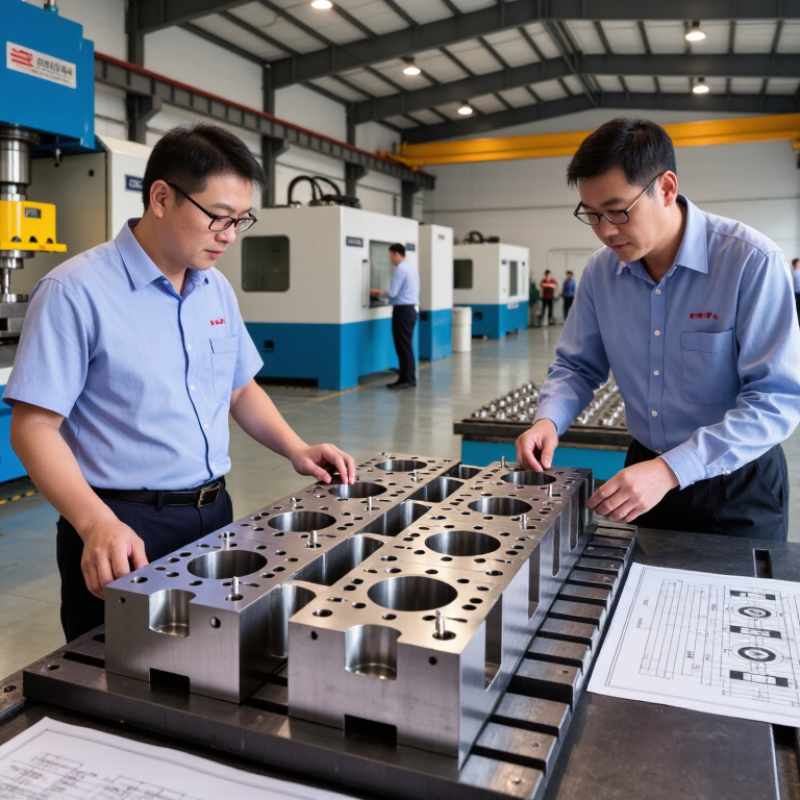
Quality expert W. Edwards Deming wrote, “Quality comes not from inspection, but from improvement of the production process.” Though Deming was not a stamping-die specialist, his principle applies to supplier evaluation: reliable output depends on repeatable processes, not one polished sample. For stamping dies, request drawings, inspection records, and results from a production-representative trial. Confirm the intended press capacity, expected die life, maintenance plan, spare-part availability, and delivery milestones. If possible, review the workshop and speak with engineers who will handle your project. A clear answer about a past tooling problem can be more useful than a flawless sales presentation.
Price still matters. Of course. But the lowest quotation may omit tryout work, design revisions, or after-sales support. Compare complete scopes and make assumptions explicit. One caution: a factory visit cannot prove every future delivery will meet requirements. Use documented acceptance criteria and keep communication records. This guide explains how to assess suppliers, compare technical and commercial offers, and choose a partner whose capabilities fit your production needs.
Define Part Requirements and Choose a Die Type: Progressive, Compound, or Single-Stage
Before requesting quotes, define the part and its production conditions. Specify material grade, thickness, annual volume, critical tolerances, and acceptable burr direction. Include a clear drawing and, if available, a sample part. Small details matter. A narrow flange or a hole near an edge can change the strip layout and die design. State the press size and available bed dimensions, too. Otherwise, a supplier may quote a tool that does not fit your production line.
Match the die type to the part’s geometry and expected volume. A progressive die performs several operations as the strip advances, making it suitable for high-volume parts with repeated features. A compound die completes multiple cutting operations at one station and can provide consistent hole-to-edge relationships. Single-stage tooling is often practical for prototypes, low volumes, or large parts that are difficult to feed through a progressive line. Each option has trade-offs in tooling cost, cycle time, and setup. A common mistake is choosing by unit price alone. Ask suppliers to explain the proposed process, show a strip layout, and describe how they will check dimensions during trials. Review the assumptions together; an unclear requirement can become an expensive revision.
Estimate Punch Clearance Using the 5–10% Sheet-Thickness Rule of Thumb
When comparing a stamping dies supplier in China, ask how its engineers calculate punch clearance and verify it during trials. A useful starting point is 5–10% of sheet thickness per side. Confirm the convention. Some drawings specify total clearance, which is twice the per-side value.
For 1 mm sheet, the rule suggests 0.05–0.10 mm clearance on each side, or 0.10–0.20 mm total. Treat this as an estimate, not a final specification. Material type, hardness, thickness variation, and cutting conditions can shift the suitable range.
A narrow clearance may increase cutting force; a wide one can leave a rough edge or heavier burrs. Small differences matter.
Ask the supplier to run sample parts and record the chosen clearance, burr height, and dimensional results. Request a clear explanation of how the team adjusted the die after testing. The rule is easy to misuse, even by experienced teams. I would not approve a tool from a calculation alone. A measured sample from your actual material tells you more than a neat number on a quote.
Check Supplier Quality Systems Against ISO 9001:2015 and IATF 16949:2016
How to Choose the Best Stamping Dies Supplier in China?
Check Supplier Quality Systems Against ISO 9001:2015 and IATF 16949:2016
ISO’s 2022 Survey recorded 1,265,216 valid ISO 9001 certificates worldwide. The figure shows broad adoption, not consistent performance. Check that the supplier’s certificate is current, independently accredited, and covers the actual production site and relevant activities. Ask to see recent audit findings and corrective-action records. Look closely.
ISO 9001:2015 should support controlled documents, calibrated measuring tools, and traceable changes to die designs. For automotive work, IATF 16949:2016 adds sector-specific controls, including risk analysis and stronger supplier oversight. Request a sample control plan and inspection record for a recent die project. Check how the supplier handles dimensional variation, tool wear, and repeat orders. A certificate can still hide weak daily discipline.
Tips: Ask for a walkthrough of the shop floor. Compare a stamped part with its drawing and inspection report. Confirm that nonconforming parts are identified, contained, and investigated. Records matter. A clear answer is useful; a polished certificate alone is not.
Validate Trial-Run Capability Against the Common Cpk ≥ 1.33 Benchmark
How to Choose the Best Stamping Dies Supplier in China?
When comparing stamping die suppliers, ask how they validate a trial run—not just whether they can produce sample parts. A common reference is Cpk ≥ 1.33, but the figure only means something when the process is stable and the specification limits are clear. Ask for the measured features, sample quantity, measurement method, and run conditions behind the result. A polished report without these details is hard to assess.
Tips: Request trial data from production-intent material, tooling, and press settings. Check critical dimensions across the run, not only on one carefully selected part. Numbers need context. If the supplier cannot explain how Cpk was calculated, pause and ask for the raw measurements.
A practical review may include a dimensional report, control chart, and notes on tool adjustments. Look for variation between cavities or stations, plus signs of drift as the press warms up. Confirm that both parties use the same datums and measurement equipment; small setup differences can change the result. Cpk is not a promise of future performance, either. It reflects a defined process under specific conditions. I would still leave room for a second trial, because early runs can expose issues that a neat first report misses. Ask who will monitor the process after approval and how changes will be documented.
Compare Verified Tool Life, Maintenance Plans, Lead Times, and Total Cost
Treat die life as a tested range, not a sales promise. Ask for run-off records showing strokes achieved, part quality, and wear at inspection. Match the test conditions to your own material grade, thickness, lubrication, and press speed. Otherwise, a claimed 500,000-hit life may mean little on your production line. Numbers need context. Ask who pays when actual life falls short.
Maintenance plans should name inspection intervals, spare components, response times, and repair responsibilities. A 2020 global value-chain resilience study estimated that disruptions lasting a month or longer occur about every 3.7 years on average. That makes a supplier’s lead-time evidence important: request recent delivery records, capacity details, and a recovery plan for delayed components. A promised ship date is not a production schedule.
Compare total cost, not just the die quotation. Include spare inserts, planned servicing, corrective repairs, freight, and the cost of press downtime. Ask suppliers to price a standard maintenance package and list exclusions in writing. Then compare cost per acceptable part across the expected tool life. I would still leave a buffer for wear and trial adjustments; forecasts are useful, but they are not guarantees.