






Choosing the right machining tools is a practical challenge for global buyers. Price matters, but it rarely tells the full story. Tool life, cutting stability, material compatibility, and delivery reliability can affect the real production cost. A low-priced end mill may appear attractive, yet premature edge wear can create rejected parts, machine downtime, and unexpected rework.
This guide examines the top machining tools used across modern workshops, including carbide end mills, indexable milling cutters, turning inserts, drills, taps, and precision reamers. It considers how each tool performs with aluminum, stainless steel, hardened steel, titanium, and other common materials. Cutting speed, feed rate, coating type, holder accuracy, and coolant conditions also deserve close attention. Small details matter.
A reliable buying decision should include more than a product catalogue. Global purchasers need clear specifications, consistent quality records, sample testing, technical support, and realistic lead times. Certifications such as ISO 9001 can support supplier evaluation, but they do not guarantee perfect tool performance in every application. No ranking is perfect. Machine condition, operator skill, workholding, and programming choices can change the result. A thoughtful comparison should therefore balance laboratory data with practical production evidence. The best machining tools are not always the most expensive or popular options. They are the tools that deliver stable results, predictable maintenance, and measurable value in a specific manufacturing environment.
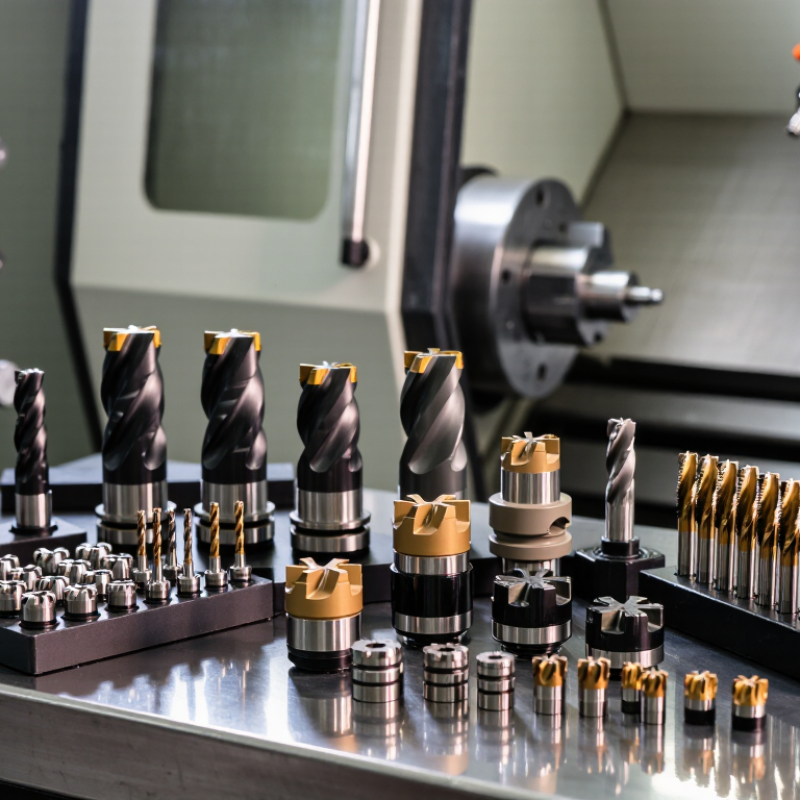
Machining tools are the working instruments behind accurate metal production. They include drills, end mills, turning inserts, reamers, taps, measuring gauges, and tool holders. CNC machines may provide motion, but the cutting tool controls the contact point, surface finish, and production stability.
Global buyers need these tools because material, tolerance, and production volume vary widely. A carbide end mill can cut hardened steel, while a different geometry suits aluminum. Tool selection also affects downtime, scrap, and shipping schedules. The 2024 World Machine Tool Survey by Gardner Intelligence reported strong worldwide demand for machine tools, reflecting continued investment in industrial production. The International Federation of Robotics recorded 553,052 industrial robot installations in 2022. Many automated cells still depend on reliable cutting tools and consistent tool measurement. In practice, small errors in tool runout can create visible marks on a machined part. I have seen specifications look perfect on paper, yet fail during long production runs.
Tips: Ask for tool material, coating, cutting parameters, tolerance data, and inspection records. Request sample testing before placing a large order. Check whether replacement tools are available near your production region. ISO 13399 data can also improve digital tool identification and reduce purchasing confusion. Do not compare price alone. A cheaper tool may consume more time through frequent changes, although this is sometimes difficult to measure early.
Choosing machining tools by application is more reliable than choosing them by appearance or price. Turning tools remove material from rotating workpieces, making them suitable for shafts, threads, and external diameters. Milling cutters work across flat surfaces, pockets, slots, and complex contours. Their tooth geometry must match the material and cutting direction.
Drills create holes quickly, but accurate production often needs reamers afterward. Reamers improve hole size and surface finish with limited material removal. Boring tools enlarge existing holes and correct alignment errors. For hardened materials, grinding wheels can achieve tighter tolerances and smoother surfaces. Carbide tools suit many industrial jobs, while ceramic or diamond tools may perform better under specific heat and wear conditions.
Tips: Check the workpiece material, required tolerance, machine speed, and coolant compatibility before ordering. Ask for tool-life data and inspection records, not only catalog dimensions. In my experience, a tool that cuts well in steel may perform poorly in aluminum. This is easy to overlook. Trial cutting is useful, but test results can change with clamping pressure, machine rigidity, and operator technique. Global buyers should also verify dimensional standards, coating details, packaging protection, and replacement availability. A lower purchase price may become expensive when shipments are delayed or tool changes increase. Selection is not always perfect; careful feedback from the shop floor usually improves the next decision.
Global buyers should compare machining tools by application, not catalog popularity. Carbide usually offers a strong balance between hardness, heat resistance, and cost. High-speed steel remains useful for interrupted cuts and lower-speed machines. Ceramic can perform well in stable, high-temperature operations, but it is less forgiving during vibration. PCD suits aluminum and abrasive nonferrous materials, while diamond tools need careful use with ferrous metals. The 2023 U.S. Cutting Tool Consumption report from USCTI and AMT recorded approximately $2.47 billion in consumption. That figure shows market demand, not guaranteed tool quality.
Design affects performance as much as material. Buyers should examine rake angle, edge preparation, flute count, helix angle, coolant access, and chip evacuation. A sharp edge may reduce cutting forces, yet a small chamfer can protect the edge during interrupted cuts. ISO 3685 recommends controlled tool-life testing, including flank-wear measurement and defined cutting conditions. In practice, I would test identical inserts across speed, feed, depth, and workpiece batches. One supplier’s “long-life” claim may fail after a small fixture change. That is easy to overlook.
Tips: Request test data with cutting speed, feed rate, material grade, and failure criteria. Compare cost per finished part, not price per insert. Record surface roughness, cycle time, and edge wear. Keep a sample run. Buyers should also question overly clean laboratory results; production floors are rarely that polite. A short trial under real coolant and clamping conditions often reveals more than a polished brochure. Mistakes happen, especially when operators change feeds without updating tool-life records.
| Tool Category | Typical Tool Material | Common Coating or Surface Treatment | Best-Suited Workpiece Materials | Design Characteristics | Typical Cutting-Speed Capability* | Wear Resistance | Impact Toughness | Surface-Finish Potential | Key Buyer Considerations |
|---|---|---|---|---|---|---|---|---|---|
| High-Speed Steel Twist Drill | M2 or cobalt-alloy high-speed steel | Black oxide, steam treatment, or titanium-based coating | Mild steel, aluminum alloys, copper alloys, plastics, and general-purpose materials | Helical flutes, standard point geometry, and broad compatibility with conventional machine tools | Approximately 15–35 m/min in carbon steel; higher values may be used in aluminum | ★★★☆☆ | ★★★★☆ | ★★★☆☆ | Cost-effective for varied applications; suitable for interrupted cutting and less-rigid setups; requires regular sharpening in production use |
| Solid Carbide End Mill | Fine-grain tungsten carbide with a cobalt binder | Aluminum-titanium-nitride, titanium-aluminum-nitride, or similar multilayer coating | Steels, stainless steels, cast iron, hardened materials, aluminum, and non-ferrous alloys | High stiffness, multiple flutes, variable helix options, and geometry optimized for roughing, finishing, or high-feed cutting | Approximately 60–180 m/min in alloy steel; application-dependent | ★★★★★ | ★★★☆☆ | ★★★★★ | Excellent productivity and dimensional control; needs rigid fixturing, suitable spindle runout, and stable cutting conditions |
| Indexable Carbide Turning Insert | Micrograin carbide substrate | Physical or chemical vapor deposition coating; uncoated grades are also available for selected non-ferrous materials | Carbon steel, alloy steel, stainless steel, cast iron, and non-ferrous alloys | Replaceable inserts with standardized geometries, chipbreakers, corner radii, and positive or negative rake options | Approximately 120–300 m/min in common steels, depending on grade and operation | ★★★★★ | ★★★★☆ | ★★★★☆ | Strong choice for production turning; compare insert grade, nose radius, chip control, clamping security, and replacement availability |
| Ceramic Turning Insert | Alumina, silicon-nitride, or mixed-ceramic substrate | Usually used without a conventional coating; substrate composition provides the primary performance characteristics | Hardened steels, cast irons, and selected high-temperature alloys under stable conditions | Very high hot-hardness capability with sharp or robust edge preparations; designed for continuous, high-speed cutting | Approximately 300–1,000 m/min in suitable cast irons or hardened steels | ★★★★★ | ★★☆☆☆ | ★★★☆☆ | High output at elevated temperatures; avoid vibration, interrupted cuts, poor fixturing, and sudden thermal shocks |
| Polycrystalline Diamond Tool | Polycrystalline diamond layer bonded to a carbide body | Diamond cutting edge; edge preparation is selected according to abrasive or non-ferrous workpiece conditions | Aluminum alloys, copper alloys, graphite, carbon-fiber composites, wood-based materials, and other abrasive non-ferrous materials | Extremely hard cutting edge with low friction; often designed with polished or high-clearance faces | Approximately 300–2,000 m/min in aluminum, depending on tool diameter and application | ★★★★★ | ★★☆☆☆ | ★★★★★ | Very long life and excellent finish in abrasive non-ferrous work; generally unsuitable for ferrous materials because diamond reacts with iron at high cutting temperatures |
| Cubic Boron Nitride Tool | Polycrystalline cubic boron nitride bonded to a carbide support | CBN cutting edge with application-specific edge preparation | Hardened steels, tool steels, bearing steels, and selected chilled cast irons | High hot hardness and strong resistance to abrasive wear; available in full-face or tip-style configurations | Approximately 100–250 m/min in hardened steel, depending on hardness and cutting mode | ★★★★★ | ★★★☆☆ | ★★★★★ | Often reduces or replaces grinding for hard turning; requires stable machines, secure workholding, and controlled cutting parameters |
| Indexable Face Mill | Carbide inserts mounted in a steel or carbide-bodied cutter | Insert coatings selected for the workpiece; body may have corrosion-resistant treatment | Steel, cast iron, stainless steel, aluminum, and general engineering alloys | Multiple replaceable inserts, adjustable cutting geometry, and options for roughing, finishing, or high-feed milling | Approximately 100–500 m/min, depending on insert material, diameter, and workpiece | ★★★★☆ | ★★★★☆ | ★★★★☆ | Efficient for large flat surfaces; evaluate cutter diameter, insert count, balance, runout, chip evacuation, and insert cost |
| Reamer | High-speed steel, cobalt high-speed steel, or solid carbide | TiN, TiAlN, or polished surface for selected materials | Steels, cast irons, aluminum alloys, and non-ferrous materials | Multiple straight or helical flutes with a small stock-removal allowance for accurate hole sizing and finishing | Approximately 8–40 m/min in steel; application-dependent | ★★★☆☆ | ★★★★☆ | ★★★★★ | Selected for hole accuracy and surface finish rather than heavy material removal; requires correctly sized pre-drilled holes and good alignment |
| * Cutting-speed figures are representative starting ranges, not universal limits. Actual values depend on tool diameter, workpiece grade and hardness, machine rigidity, coolant strategy, tool overhang, radial engagement, axial depth of cut, and manufacturer-recommended parameters. | |||||||||
For global buyers, the “top” machining tool is not always the fastest one. It must match the material, tolerance, batch size, and local service capacity. CNC turning centers suit round parts, while five-axis machining centers reduce setups for complex components. The International Federation of Robotics reported 541,302 industrial robot installations in 2023. This signals stronger automation demand, but automation alone cannot correct poor fixturing or unstable cutting conditions.
Measurement data should guide the purchase. Check positioning accuracy, repeatability, spindle speed, torque, tool-change time, and thermal stability. ISO 230-2 provides recognized methods for testing positioning accuracy and repeatability. Ask suppliers for recent test records, not only catalogue figures. A 0.01 mm claim means little if the machine loses accuracy after several hours of operation. I have seen buyers overlook coolant filtration, then face blocked nozzles and rough surfaces.
Total sourcing cost also matters. Include tooling, software, training, spare parts, energy, freight, duties, and downtime. UNCTAD’s Review of Maritime Transport notes that ships carry over 80% of global merchandise trade by volume. Sea freight can lower unit cost, yet a missing servo drive may stop production for weeks. Evaluate regional technicians, remote diagnostics, documentation quality, and response times. Shortlist suppliers that support the target voltage, safety rules, and inspection requirements. The cheapest quote often deserves another look. Still, even experienced buyers can overvalue specifications and undervalue operator training.
Indicative upper-end cutting speeds for machining steel, shown in metres per minute (m/min).
Cutting speed is only one sourcing factor. Global buyers should also evaluate workpiece material, tool life, surface-finish requirements, machine rigidity, coolant compatibility, availability, delivery reliability, and total cost per finished component. HSS is economical for low-speed work, carbide suits general-purpose production, while ceramic, CBN, and PCD are selected for specialized high-speed or difficult-to-machine applications.
Global buyers often start with tool type, but evaluation should begin with process conditions. A carbide end mill that performs well in aluminum may fail in hardened steel. Check workpiece material, hardness, machine power, spindle interface, coolant method, and target tolerance. Ask for inspection records, coating data, and test results from comparable applications. Real samples matter. Measure edge condition, runout, and surface finish after a controlled trial. A polished appearance proves little.
Quality means repeatable performance, not only a sharp first cut. Review tolerance consistency, batch traceability, packaging, and replacement policy. Confirm holder dimensions, gauge length, chip evacuation, and programming requirements before ordering. Small mismatches can create vibration, scrap, or unsafe loading. Calculate cost per acceptable part, including tool life, setup time, rejected parts, and shipping. The cheapest item may become expensive quickly. Premium pricing is not proof of value.
Supplier support can determine whether a tool succeeds on the shop floor. Look for clear technical drawings, application guidance, response times, and practical troubleshooting. Ask whether support is available across time zones and in writing. A reliable supplier should explain limits instead of promising universal results. Request a pilot quantity and define success through tool life, cycle time, tolerance, and surface finish. I have seen buyers overfocus on catalog specifications. That judgment can be flawed. Trial data should guide the purchase, while feedback should challenge the original assumptions.