Why Choose Injection Molded Parts for Global Manufacturing?
Injection molded parts help manufacturers produce consistent components across multiple markets. The process supports high-volume production, repeatable dimensions, and efficient material use. A properly designed mold can make thousands of identical housings, clips, medical components, or automotive connectors. Each cycle may last only seconds. That speed matters when supply chains face demanding schedules.
John Bozzelli, founder of Scientific Molding, has stated, “Scientific molding is the application of scientific principles to the injection molding process.” His view highlights an important point: reliable production requires more than pressing a button. Engineers must study resin behavior, cooling rates, gate locations, shrinkage, and mold maintenance. Small temperature changes can affect a thin wall or create visible sink marks. Those details influence quality, cost, and customer trust.
The global value is practical. Injection molded parts can be produced near major markets, reducing shipping volume and improving response times. Standardized tooling and documented process settings also support consistent output between qualified facilities. However, this method is not automatically the best choice. Tooling costs can be substantial, especially for complex designs or short production runs. Early prototypes may expose weaknesses that drawings miss. That is useful, although sometimes frustrating. Material selection, regulatory requirements, and supplier capability still need careful review. A strong manufacturing decision balances speed, durability, tooling investment, and real production evidence.
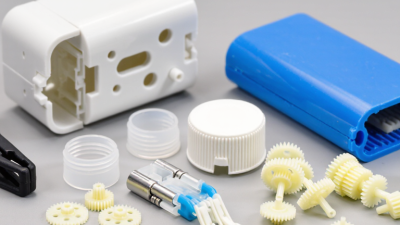
Injection molded parts are components formed by forcing heated material into a shaped mold. The material cools, solidifies, and takes the mold’s internal geometry. Common materials include thermoplastics, rubber-like compounds, and selected thermosets. Parts may be small clips, medical housings, appliance panels, or automotive connectors.
The process begins with a mold designed around the part’s function. Engineers review wall thickness, draft angles, ribs, holes, and possible shrinkage. During production, a machine controls pressure, temperature, and cooling time. A finished part may show a small gate mark or an ejector-pin circle. These details are normal, but they still require inspection.
Good manufacturers measure critical dimensions with gauges or coordinate equipment. They also check material certificates, color consistency, surface defects, and batch records. This evidence supports reliable production across different facilities and shipment locations. Injection molding can provide repeatable parts at high volumes, yet it is not automatically the cheapest option. Complex tooling can require significant investment. A rushed design may cause warpage, trapped air, or difficult assembly. I have seen small changes in wall thickness improve cooling, although results must be verified through trials. That lesson is easy to overlook. A practical review before tooling usually prevents expensive corrections later.
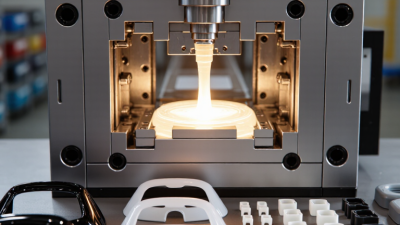
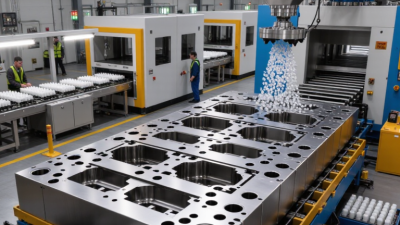
Injection molding begins with small plastic pellets, not finished parts. A hopper feeds them into a heated barrel. Inside, a rotating screw melts and mixes the material. The melt then moves forward under controlled pressure.
The screw injects the material into a closed mold. Cooling channels remove heat while the cavity holds the shape. After solidification, ejector pins release the part. Operators inspect dimensions, surface finish, and flash around the parting line. Small details matter.
According to the Plastics Industry Association’s 2023 Size and Impact report, U.S. plastics manufacturing generated about $548.1 billion in economic output and supported 1.55 million jobs in 2022. That scale explains injection molding’s importance in global production. The method offers repeatable dimensions, rapid cycle times, and efficient material use after tooling is validated.
The process is efficient, but not forgiving. A slight temperature shift can create warping, sink marks, or short shots. A perfect first trial is uncommon. Engineers often adjust cooling time, injection speed, and holding pressure before approving production. Mold design also affects international consistency. Clear tolerances, resin specifications, and inspection records help different facilities produce comparable parts. Scrap reduction still needs attention, especially when complex molds require long setup cycles.
Injection molded parts suit global manufacturing when material choice follows the product’s real environment. Polypropylene handles moisture, chemicals, and repeated flexing, making it useful for housings, caps, and living hinges. ABS offers balanced surface finish and impact resistance for indoor enclosures. Polycarbonate tolerates higher impact and heat, but it costs more and needs careful drying before molding. Nylon supports strong gears and clips, although moisture can change its dimensions. Soft thermoplastic elastomers add grip where users hold a component. Material data sheets are only a starting point. Actual testing matters.
A suitable design begins with even wall thickness. Thick sections often sink, while abrupt changes can cause warpage or internal stress. Add draft angles so parts release without scraping the mold. Ribs can increase stiffness, but overly thick ribs may leave visible marks. Rounded corners reduce stress and improve material flow. Bosses need support around their bases. Gates, weld lines, shrinkage, and cooling time should be reviewed before tooling. I have seen attractive CAD models fail because a small internal corner trapped air. Small details matter.
For global production, specify tolerances, color references, and inspection methods in plain language. Request material certificates and dimensional reports for reliable quality records. Consider temperature changes during shipping, local recycling rules, and restricted substances in each target market. A part may pass room-temperature testing yet crack after cold storage. That weakness is easy to miss. Pilot runs can reveal short shots, flash, or inconsistent fit before high-volume production. Do not force a complex shape into one mold when a simple assembly is more reliable. Sometimes the cheaper design is not the dependable one.
| Decision Dimension | Relevant Material or Design | Key Technical Characteristics | Typical Suitable Applications | Global Manufacturing Advantages | Important Design Considerations |
|---|---|---|---|---|---|
| Production Volume | Thermoplastic injection molding | High repeatability after the mold is validated; cycle times commonly range from several seconds to several minutes depending on part size, material, and cooling requirements. | Medium- to high-volume housings, closures, consumer products, automotive components, and industrial parts. | The fixed tooling cost can be distributed across a large production quantity, reducing the average part cost at scale. | Tooling economics should be evaluated against expected lifetime volume, part complexity, material choice, and required surface finish. |
| Material Versatility | PP, PE, ABS, PC, PA, POM, PBT, and TPE | Thermoplastics can provide different combinations of stiffness, impact resistance, chemical resistance, heat resistance, wear resistance, and flexibility. | Packaging, electrical enclosures, mechanical components, medical-device components, seals, clips, and consumer products. | A broad resin selection supports regional sourcing strategies and allows the material to be matched to functional requirements. | Confirm grade availability, regulatory requirements, moisture sensitivity, shrinkage, processing temperature, and compatibility with additives or fillers. |
| Dimensional Stability | Glass-filled PA, PBT, PC/ABS, or other engineered resins | Reinforced or engineered materials can improve stiffness and heat performance, but fiber orientation and shrinkage may affect warpage and tolerances. | Structural brackets, electrical connectors, under-hood components, appliance parts, and precision housings. | Stable, repeatable molding processes can support consistent assembly across multiple production locations. | Use uniform wall thickness, balanced filling, appropriate rib proportions, and mold-flow analysis where tight tolerances or complex geometry are required. |
| Impact Resistance | ABS, PC, PC/ABS, impact-modified PP | These material families are commonly selected when toughness and resistance to accidental drops or impact are important. | Protective covers, tool housings, electronic enclosures, transport components, and appliance panels. | Lightweight molded parts can reduce shipping mass while maintaining functional protection. | Account for temperature effects, stress concentrations, weld lines, chemical exposure, and the effect of surface texture on appearance. |
| Chemical and Moisture Resistance | PP, PE, POM, PBT, and selected specialty grades | Resistance varies by resin and by exposure to solvents, oils, detergents, fuels, acids, bases, and absorbed moisture. | Fluid-handling components, laboratory products, containers, pumps, fittings, and industrial equipment. | Material-specific designs can support use in different climates and operating environments. | Validate the exact resin grade and chemical exposure conditions; do not assume that all grades within a polymer family have the same resistance. |
| Heat Performance | PA, PBT, PPS, high-temperature PC, and other heat-resistant thermoplastics | Heat resistance depends on continuous-use temperature, short-term peak temperature, load, moisture, and chemical environment. | Electrical parts, automotive components, lighting components, appliance interiors, and industrial assemblies. | Suitable heat-resistant materials can replace some metal parts while reducing weight and integrating multiple features. | Review the resin's heat-deflection temperature, long-term aging behavior, flammability rating, and processing requirements. |
| Flexibility and Sealing | TPE, TPU, flexible PVC, and elastomer-modified materials | Flexible materials can provide elasticity, soft-touch surfaces, vibration damping, and sealing performance. | Gaskets, grips, protective boots, cable seals, overmolded handles, and flexible closures. | Two-shot or insert molding can combine rigid and flexible functions in one assembled component. | Design for material compatibility, suitable undercuts or mechanical locks, controlled compression, and reliable bonding at the interface. |
| Wall Thickness | Uniform-wall thermoplastic designs | Uniform walls generally improve filling and cooling balance, reducing sink marks, voids, residual stress, and warpage. | Most molded housings, covers, trays, panels, and technical components. | Better process stability helps maintain consistent quality between production batches and facilities. | Avoid abrupt thickness changes; transition gradually and use coring to reduce unnecessary mass and cooling time. |
| Ribs, Bosses, and Supports | Reinforced molded geometry | Ribs and bosses increase stiffness and provide fastening points without requiring a solid thick section. | Housings, mounting brackets, structural covers, and parts requiring screws or snap-fits. | Integrated features can reduce the number of separate components and assembly operations. | Keep ribs and bosses thinner than adjoining nominal walls where practical, provide draft, and avoid placing them directly opposite visible surfaces. |
| Draft and Ejection | Drafted faces and appropriate ejector locations | Draft allows the molded part to release from the tool; the required angle depends on material, texture, depth, and tooling conditions. | Parts with deep walls, textured surfaces, slides, lifters, or complex release features. | Efficient ejection reduces cycle interruptions, tooling wear, and cosmetic defects. | Provide draft on vertical faces, avoid deep unvented pockets, and place ejector marks on non-cosmetic or structurally suitable areas. |
| Complexity and Integration | Slides, lifters, inserts, overmolding, and multi-cavity tools | Advanced tooling can form side features, threaded details, inserts, or multiple materials within one production process. | Connectors, medical components, consumer products, automotive parts, and assemblies with integrated fastening or sealing features. | Part consolidation can reduce assembly steps, logistics handling, and opportunities for assembly error. | Complex tooling increases cost and maintenance requirements; simplify geometry where the functional benefit does not justify the added tooling complexity. |
| Surface Appearance | Polished, textured, molded-in color, painted, or plated surfaces | Appearance depends on resin, mold finish, gate position, weld lines, shrinkage, fiber orientation, and post-processing. | Visible housings, instrument panels, consumer products, interior components, and branded-looking product surfaces without using a specific brand. | Color and texture can often be formed directly into the part, reducing secondary finishing operations. | Define acceptable gloss, texture, color variation, weld-line locations, and cosmetic inspection standards before tooling release. |
| Sustainability and Recyclability | Recyclable thermoplastics and recycled-content grades | Many thermoplastics can be remelted and reprocessed, although performance may change after repeated thermal cycles or blending. | Non-critical housings, packaging components, appliance parts, and products designed for material recovery. | Lightweighting, part consolidation, and recyclable material selection can reduce material use and transportation impact. | Separate incompatible materials where possible, identify resin families clearly, and verify recycled-content consistency and performance. |
| Quality and Process Control | Validated molding process with inspection controls | Important variables include melt temperature, mold temperature, injection speed, pressure, holding time, cooling time, and moisture control. | Safety-related, precision, medical, electrical, and high-visibility components. | Documented process windows and standardized inspection methods improve consistency across international supply chains. | Define critical dimensions, appearance limits, sampling plans, traceability requirements, and material certificates before production begins. |

Injection molded parts support global manufacturing by delivering consistent shapes across multiple production sites. A validated mold can produce thousands of housings, clips, or medical-device components with stable dimensions. This repeatability simplifies assembly and reduces adjustments between factories. It also helps engineering teams share the same drawing, material specification, and inspection criteria.
The process supports many materials and surface requirements. Engineers can select reinforced polymers for strength, flexible grades for seals, or flame-resistant materials for electrical enclosures. Molded textures can improve grip without adding separate parts. Cycle times are measurable, making capacity planning more practical. Still, results depend on disciplined process control. Temperature changes, moisture, and tool wear can affect quality. Small details matter.
Global programs also benefit from standardized quality checks. Teams can measure wall thickness, warpage, color, and critical dimensions before shipment. Digital inspection records improve traceability across suppliers and regions. Packaging can be designed around container size, reducing damage during long transport. Local regulations must guide material selection and product testing. A part suitable for one market may require changes elsewhere. That reality is easy to underestimate. Tooling costs can also challenge low-volume projects, especially when forecasts are uncertain. A careful pilot run often reveals problems that drawings cannot show. Decisions become stronger when production data, operator feedback, and customer requirements are reviewed together.
Quality, cost, and supply reliability decide whether injection molded parts succeed globally. In production reviews, small details often create expensive problems. A 0.2-millimeter mismatch can prevent a cover from closing. Uneven cooling may leave sink marks, warping, or visible stress. Clear inspection standards matter. They should define dimensions, surface defects, color limits, and functional tests. Mold maintenance records also provide useful evidence. Resin traceability and first-article approval improve confidence before volume production begins. Quality is not only an inspection step.
Tooling creates a significant early expense, but it can reduce unit cost at higher volumes. Cycle time, material usage, scrap rates, and labor should guide the calculation. A low quotation may exclude mold repairs or engineering changes. That gap can hurt later. I have seen teams choose a cheaper tool, then pay more for repeated adjustments. The decision was understandable, but incomplete. Design for manufacturability can reduce undercuts, difficult ejection, and unnecessary material thickness. Simple changes often protect both cost and consistency.
Global supply planning needs more than a promised shipping date. Manufacturers should review capacity, backup processes, packaging strength, export documents, and communication speed. A realistic lead-time plan includes sampling, mold trials, production, inspection, and transport. Keep safety stock for critical parts. Even reliable suppliers face power interruptions, shipping delays, or resin shortages. Dual sourcing can reduce exposure, although it may require matching molds and process conditions. That effort is not always cheap. It can still protect production when one facility cannot respond quickly.