





Top Injection Molded Parts Manufacturers in China

China has become an important sourcing destination for injection molded parts, serving industries from consumer electronics to automotive equipment. Yet choosing a manufacturer involves more than comparing quoted prices. Mold design, resin selection, production controls, and inspection methods all affect how a part performs after it leaves the factory. Small details matter: a draft angle, a visible weld line, or inconsistent wall thickness can influence fit and appearance.

This guide explores leading manufacturers in China and the capabilities buyers should examine. Look for clear evidence of engineering support, mold-trial procedures, dimensional inspection, and experience with the materials your project requires. Ask how suppliers handle revisions, sampling, and production records. These conversations can reveal gaps that a polished website cannot. Fast quotes are useful. They are not proof of quality.

No single supplier is right for every project. A company with advanced equipment may not suit a short production run, while a lower unit price can come with added tooling or communication costs. Compare technical capability, quality consistency, responsiveness, and total project cost before making a decision. The process can be less tidy than a shortlist suggests. Careful checks help turn it into a more dependable sourcing choice.
Top Injection Molded Parts Manufacturers in China

Injection Molding in China: Processes, Resins, and Part Types

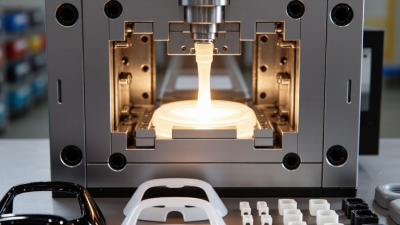
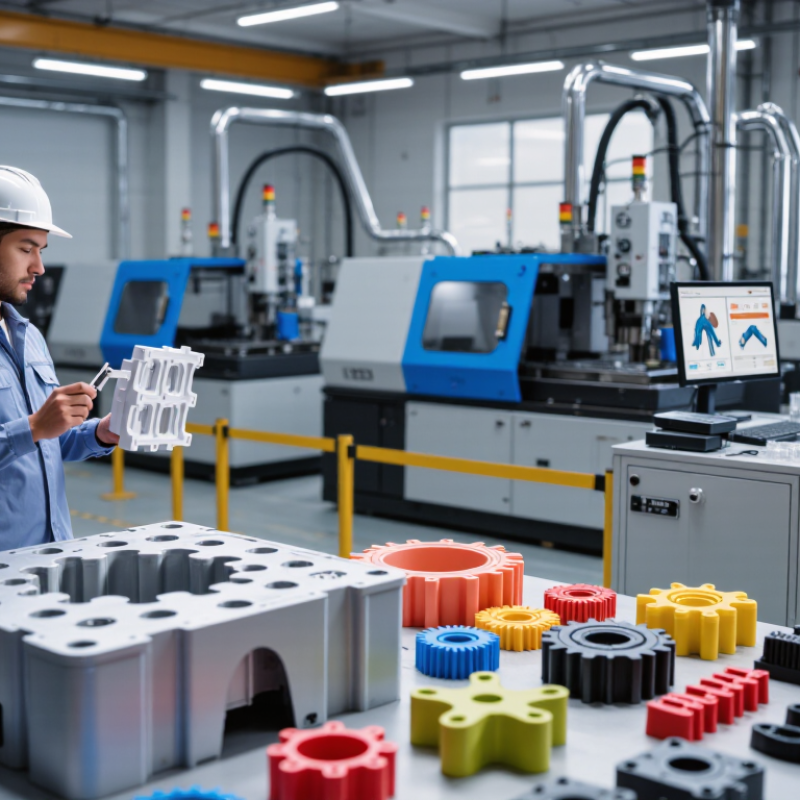
Injection molding in China covers more than standard plastic housings. A typical production run begins with drying resin pellets, melting them in a heated barrel, and injecting the melt into a cooled steel mold. Cycle time depends on wall thickness, mold temperature, resin, and part geometry. Thin clips may cool quickly; thick sections can shrink or warp. Small details matter.

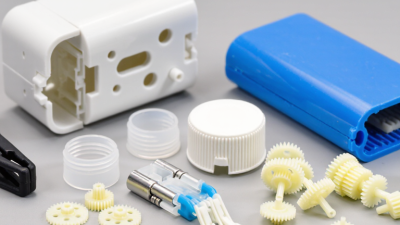
Resin choice follows the part’s job. Polypropylene suits lightweight, chemical-resistant components, while ABS is common for rigid enclosures with a smooth finish. Polycarbonate supports impact resistance and clarity; nylon handles wear and repeated movement, but absorbs moisture. Tooling teams may use insert molding to capture metal fasteners or overmolding to add a softer grip. These options add steps, not magic.

Grand View Research’s 2024 analysis estimated the global injection molded plastics market at USD 302.6 billion in 2023, with projected growth of 4.7% annually from 2024 to 2030.

That scale reflects broad demand, but it does not guarantee a good part. Buyers should review resin specifications, mold-flow assumptions, sample dimensions, and inspection records. A low quoted price can hide thin walls, weak tolerances, or limited process control. And samples can mislead. A sound evaluation checks production parts across multiple cycles, not just one polished piece.

China’s Plastic Products Output in 2023: 74.89 Million Tonnes

China’s plastic products output reached 74.89 million tonnes in 2023, reflecting the scale of its manufacturing base. The figure covers many product categories, not injection-molded parts alone. Still, it points to extensive capacity in material processing, tooling, and production. Capacity matters. Consistency matters more. A national output figure cannot show how carefully a factory controls resin moisture, melt temperature, or cooling time. Small process changes can warp a thin wall or leave a snap-fit too loose.

For buyers comparing injection molded parts manufacturers in China, practical evidence is more useful than scale alone. Ask how samples are measured, how production settings are recorded, and how defects are handled. A capable team should explain its inspection steps in clear terms. Look for checks on dimensions, surface finish, and fit, not just appearance. Details count. The numbers also have limits: output does not reveal energy use, material efficiency, or the quality of every component. Even a well-organized process can need adjustment when a design changes. That part is easy to underestimate.

How to Compare Manufacturers: Capacity, Cavitation, and Quality Systems

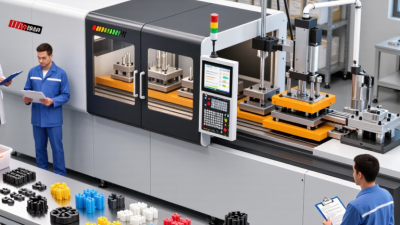
When comparing injection-molded parts manufacturers in China, do not judge capacity by machine count alone. Ask how many presses fit your required tonnage and whether schedules leave room for repeat orders. A busy factory may quote quickly but struggle with a sudden volume increase. Request recent production records for similar parts, not just a maximum monthly figure.

Cavitation affects output, tooling cost, and process stability. More cavities can lower the cost per part, but only when the mold fills evenly. Ask for sample data showing cycle time, scrap rate, and cavity-to-cavity weight variation. Check the quality system too: inspection plans should define what gets measured, how often, and what happens when results drift. Look for traceable records, calibrated gauges, and a clear process for reviewing defects.

Tips: Ask to see a first-article report and a sample inspection record. Compare them with your drawing. Confirm who approves mold changes and how revisions are documented. Small details matter.

A factory visit or live video walkthrough can reveal practical limits, such as crowded material storage or inconsistent labeling. Still, one visit cannot prove long-term consistency. I would compare the same part specification across suppliers, then review production samples before committing to larger volumes.

ISO 20457:2018 Tolerances for Injection-Moulded Plastic Parts

ISO 20457:2018, Plastics moulded parts — Tolerances and acceptance conditions, gives manufacturers and buyers a shared basis for specifying dimensions and judging moulded-part quality. It does not make every feature equally precise. Tolerances should reflect the part’s geometry, material behaviour, tooling, and production process. A long, thin cover may warp differently from a compact clip, even when both use the same resin. A drawing should identify critical dimensions clearly; otherwise, a supplier and buyer may interpret “acceptable” differently.

The scale of production makes clear specifications valuable. The OECD’s 2022 Global Plastics Outlook reports that global plastics production reached 460 million tonnes in 2019, nearly twice its 2000 level. For parts made in China, discuss measurement conditions, sampling, and acceptance criteria with the supplier before approving the tool. Moisture-sensitive materials may change dimensions after moulding, so record conditioning and measurement timing. A caliper is not enough. Use suitable gauges for tight features, and keep inspection results tied to the drawing revision. Even then, a tolerance table cannot prevent every process shift; that part deserves honest review.

Top Injection Molded Parts Manufacturers in China - ISO 20457:2018 Tolerances for Injection-Moulded Plastic Parts
Supplier Evaluation Dimension What to Check Useful Evidence or Data Connection to ISO 20457:2018
Tolerance planning Confirm that the supplier reviews part function, nominal dimensions, material, and moulding conditions before agreeing to tolerances. A dimensioned drawing with identified critical features, agreed tolerance requirements, and a documented design review. The standard provides a framework for tolerances and acceptance conditions; suitable tolerances should be specified for the part rather than assumed to be identical for every feature.
Tolerance selection Ask how tolerance requirements are assigned and recorded for each relevant dimension. A tolerance plan that references the agreed drawing and applicable ISO 20457 requirements. ISO 20457 includes tolerance groups. The applicable requirements should be agreed for the part; the standard should not be treated as one universal tolerance value for all moulded dimensions.
Material control Verify resin grade, supplier, colour, and any permitted material substitutions before production. Resin technical data sheets, lot traceability, and written approval for changes. Material choice and processing affect mould shrinkage and dimensional results, so they are important inputs to tolerance planning and acceptance.
Mould design and shrinkage Review how the mould design accounts for the selected resin and the part’s geometry. Mould design review records, trial-part measurements, and documented revisions where required. Shrinkage and part geometry influence final dimensions; tolerance acceptance should be assessed on the moulded part under agreed conditions.
Measurement capability Check that inspection equipment is suitable for the feature size, geometry, and required measurement method. Equipment list, calibration records, inspection instructions, and sample measurement reports. Reliable acceptance decisions depend on defined measurement methods and suitable, maintained equipment.
Process consistency Ask how moulding settings, process changes, and production lots are controlled. Approved process parameters, production records, and a documented change-control procedure. Consistent processing supports repeatable dimensions and makes inspection results more meaningful.
First-article inspection Require dimensional verification before approving a new mould, modified tool, or first production run. A first-article report listing drawing characteristics, measured results, equipment, and acceptance status. An agreed inspection report helps demonstrate whether the moulded part meets specified dimensional and acceptance requirements.
Ongoing quality records Establish inspection frequency, sampling rules, nonconformance handling, and record-retention expectations. Inspection plans, lot records, corrective-action reports, and retained samples where agreed. Acceptance conditions should be clear to both parties and applied consistently throughout production.

Note: ISO 20457:2018 is a tolerance and acceptance framework for moulded plastic parts. Confirm the applicable requirements against the current standard and the part drawing; actual dimensional capability depends on the material, geometry, tooling, process, and measurement method.

Leading Chinese Manufacturers by Industry Focus and Production Capability

Chinese injection molding manufacturers often organize their work around specific industries. Automotive suppliers may handle durable housings, clips, and interior components, where fit and repeatability matter. Electronics-focused factories typically produce compact enclosures with tight dimensional requirements. Appliance specialists may run larger parts, such as control panels or bins, using molds designed for steady production. Details matter.

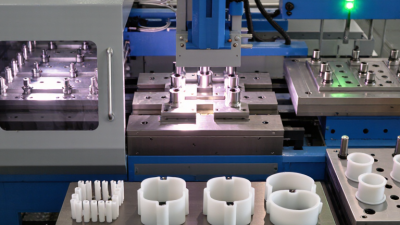
Production capability varies widely. A factory’s press range, mold-maintenance team, and inspection equipment can be as important as its quoted output. Ask whether it can manage your part’s resin, wall thickness, annual volume, and secondary operations, such as trimming or assembly. A 24-cavity mold may suit a small, stable component, while a complex housing could need a slower cycle and closer process control. Bigger is not always better.

A useful evaluation includes a review of sample parts, mold-flow assumptions, measurement records, and trial-run results. Check how the manufacturer handles changes when a dimension drifts or a tool needs repair. Samples are not enough. In my experience, a clean sample can conceal inconsistent production, and capability figures on paper may not reflect a factory’s busiest shift. Ask for evidence tied to the specific part, then compare it with your own acceptance criteria.